
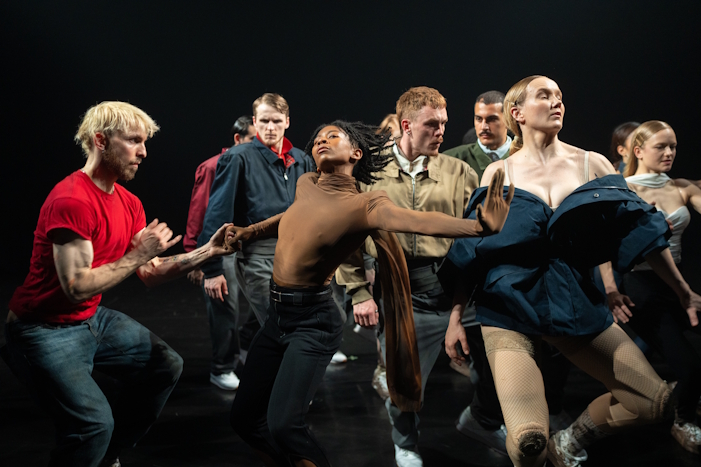
Sadler’s Wells, London
June 10, 2026
As it celebrates its centenary, Rambert in 2026 is a very different company to the one that Marie Rambert founded a century ago. That original company has rarely been given its due as the crucible that enabled the modern ballet renaissance in Britain, smothered as it has been by story of the foundation of the Royal Ballet. Ninette de Valois had the building and eventually the funding and Rambert had to watch as the dancers and choreographers that she had nurtured left to earn a better living.
Rambert eventually left the tiny Mercury Theatre, setting up camp in spacious, if rather run down, studios in Chiswick in 1971 until they decamped again for the South Bank in 2013. In between, they gave up hope of permanent residence in the Barbican and the unequal struggle of maintaining a classical ballet company, focusing on contemporary dance from 1966 when Rambert herself stepped down as artistic director.
It was probably sensible of current artistic director Benoit Swan Pouffer not to attempt to recreate anything from the back catalogue. That was tried under Mark Baldwin’s tenure with mixed results. That said, the three works on offer in This is Rambert do not compare well against some of the signature works of the past. The likes of Ghost Dances and Swansong, for example, could not provide a bigger contrast than the vague abstraction offered in this triple bill.
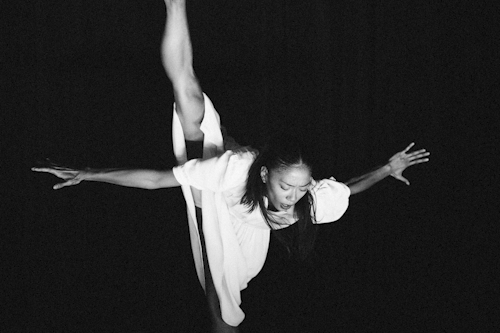
Photo Camilla Greenwell
In Crimson by Bobbi Jene Smith and Or Schraiber is described as a look at the liminality of relationships. It is the most accessible work of the programme, even if it is conducted mostly in the gloom of a scarcely lit stage at a frenetic pace.
Choreographically, and like the following two works, it uses a significant amount of unison movement, and was neat and precise in execution, but struggled to hold the interest. There is quite a bit of simulated sex and lots of fleeting couplings, all executed at the gallop with much waving and jerking of limbs. There are a few moments of wit in the encounters, and it does at least have live music including Bach and Bizet, although over-amplified. But it seemed to leave the audience unimpressed and received a rather lukewarm warm reaction.
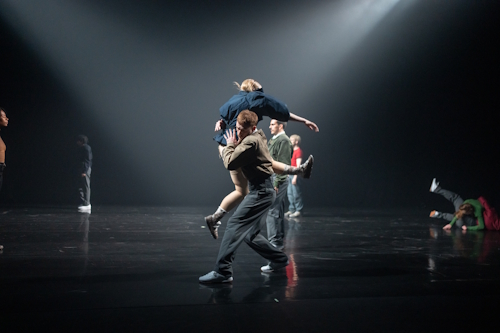
Photo Hugo Glendinning
(LA)HORDE’s Hop(e)storm (parentheses seem to be obligatory) is supposed to be a “lindy hop call for equality, freedom and collective joy.” I might have been stunned by the thumping bass, but I certainly didn’t notice any of the signature lifts of lindy hop although there was a lot of communal jigging around and flinging of limbs accompanied by red and green flashing lights that lent a sickly pallor to the dancers’ visages amidst the general darkness. It is all on one level and frequently in unison with nothing to delight the eye, let alone soothe the ears.
Emma Evelein’s Gallery of Consequence is set in a (dystopian) airport lounge. Mind you, what airport lounge isn’t dystopian? However, rather than listless souls in endless queues for check in, expensive coffee, tatty souvenirs or just wandering around, dead-eyed killing the painful hours of waiting before take-off, this airport is full of frantic, rushing hysterics who inexplicably seem only to communicate in an American accent.
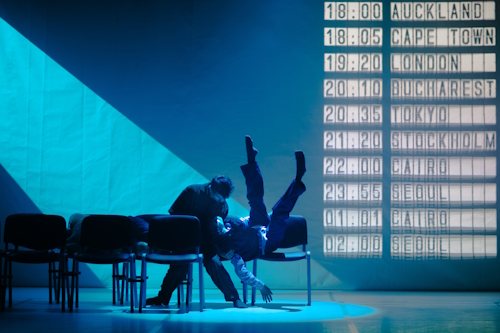
Photo Yiling Zhao
The upstage projection of a departure board flickers and scrolls, at least providing the most light that the stage sees all programme. Again, the recordings are blasted at the audience. So much so that, as with Hop(e)storm, they were accompanied by the thrum of the vibrating metal facings.
There was a little relief in the pace with the final pas de deux accompanied by an American folk song.
The dancers are undoubtedly of the best; well-trained and well-rehearsed. But the three works do not provide much contrast and nothing seemed to speak to the age. The programme seemed empty and superficial. To survive for a century through the vicissitudes of arts policies is no mean feat, but audiences deserve and need works that do more than reflect popular dance and music back into the echo chamber.