
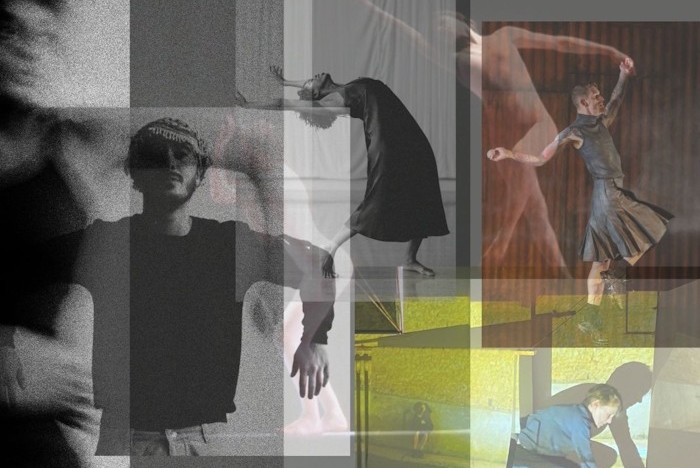
Siobhan Davies Studios, London
July 3, 2026
Siobhan Davies needs little introduction in British contemporary dance. A founding member of London Contemporary Dance Theatre, later founder of Siobhan Davies Dance, she has long been one of the artists who helped shift choreography away from the conventional theatre frame and into wider artistic territory.
Siobhan Davies Studios, now celebrating its twentieth anniversary, carries that spirit into the building itself. It is a handsome, welcoming space, and for Living Image: Chapter 1, the relaxed atmosphere matters. Audience members sit on chairs, beanbags and the floor, and are free to move. Davies herself is there too, watching alongside everyone else.
Living Image takes Davies’ 1977 solo Sphinx as its starting point. Across four chapters, twenty artists spend five days with the work and make their own responses. Chapter 1 brings together Temitope Ajose, Dan Daw, Sasha Mahfouz Shadid, Shannelle ‘Tali’ Fergus and Andrea Buckley.
The artists are not working from a recording of Sphinx, but from conversations with Davies and traces of the original work. The project places memory and transmission above reconstruction. For the audience, however, it creates a different challenge. Without some contextual framing, the relationship between source and response can feel distant. A short introduction or screening before the performance might have made that dialogue between past and present more legible.
The first response, by Ajose and Daw, begins quietly among the audience. The two performers walk through the room before anything feels formally underway. At first, I watched them. Soon I was listening instead: the rustle of Ajose’s clothing, Daw’s foot brushing against the wooden floor, the small sounds that become large when a room is still enough.
The piece grows out of relationship. They move apart and together, match and resist each other, then face one another and hold each other by the arms. A light push and pull becomes a shared wobbling balance. Stability is never quite reached; the interest lies in the constant adjustment between two bodies.
When they return to sit among us, the ending is pleasingly uncertain. One nearby audience member glances at Ajose as if unsure whether she is still performing. That uncertainty is the point. The work begins in the audience and returns there without drawing a hard line between performer and spectator.
Sasha Mahfouz Shadid’s contribution is the strongest of the evening.
It begins outside the studio window. Backlit by the evening sun, his figure appears almost like shadow theatre. Papers of different sizes cover the glass. He traces his fingers between them, then peels some away. Opening the window, he drops the loose papers into the studio before climbing down and taking up an oud.
The atmosphere changes at once. The oud deepens the image, adding another layer to the warm light, the slightly hot studio and the quiet audience fanning themselves.
It is also funny. As Shadid plays and tries to walk towards us, the cable from his instrument pulls him back. The first time raises a smile. The second makes the joke clear. The third ends with the cable snapping free. It is beautifully timed, and it releases the piece from any danger of becoming too solemn.
The work keeps shifting: music, papers, window, body, humour, sudden stamps, small gestures that seem to carry private memory. A tiny sound from the oud becomes like the wings of an insect before being cut off by a foot hitting the floor. A small piece of paper moves from window to instrument, to wall, and finally to the floor in a gesture like burial.
I do not know exactly what the paper is. I do not need to. The work holds attention because each object and action changes the situation in the room.
Andrea Buckley’s quieter response brings together live movement and filmed images of herself with horses. Given her long somatic practice, the material suggests an interest in sensitivity, attention and communication beyond human movement. In performance, however, the filmed images and live movement remain more parallel than connected. The work stays inward and meditative, and its quietness begins to flatten out.
Shannelle ‘Tali’ Fergus works with recorded speech and memory. Her response has a clear idea: how a dance survives through voice, recollection and narration. The problem is the relationship between text and movement. Too often the body seems to follow the voice rather than challenge it. The concept is visible, but the performance stays too close to explanation: voice leads, movement illustrates.
Chapter 1 works best when it activates the room. Ajose and Daw make us listen to contact, friction and balance. Shadid uses window, light, oud and humour to make the archive feel alive. Buckley and Fergus offer thoughtful premises, but their works have less charge in performance.
I left with three clear memories: fabric rustling in a quiet room, a figure like a shadow behind a sunlit window, and the sound of an oud filling the Roof Studio.
If Chapter 1 suggests anything, it is that an archive survives most vividly when it produces new encounters. The artists in the remaining chapters now have a clear question to pursue.