
The Place, London
October 16, 2026
There was a wonderful sense of warmth, generosity and welcome about Afro Dance Xplosion 2026: Transcen-dance, presented by Feel the Rhythm Productions at The Place. Celebrating the richness and diversity of dance from Africa and the African diaspora, the evening brought together artists of different generations, backgrounds and dance traditions in a programme which was as varied as it was engaging.
Now in its 16th year, the festival continues to bring together both established performers and emerging young artists. This year’s programme offered a series of shorter works followed by a more substantial concluding piece, encompassing traditional and contemporary dance, film and, most memorably, some outstanding live percussion. What distinguished the evening throughout was not simply the considerable technical skill of the performers, but their wholehearted commitment to their art, and their ability to draw the audience into it. There was a very tangible sense of community and shared enjoyment.
The evening opened with Libation, a short solo performed by David Blake, accompanied by live percussion. The pouring of libations is a traditional element of many African ceremonies, marking an occasion through an acknowledgement of nature, ancestors and the spiritual world.
Blake’s performance was graceful and poetic. His sweeping gestures and the ritual pouring of water were executed with an expressive simplicity which gave the choreography a particular clarity. The staging was minimal, but effective, with grasses suggesting a riverbank and establishing an atmosphere of quiet reflection. Blake was completely absorbed in the movement, yet never lost his connection with the audience. It was a gentle, thoughtful and welcoming opening.
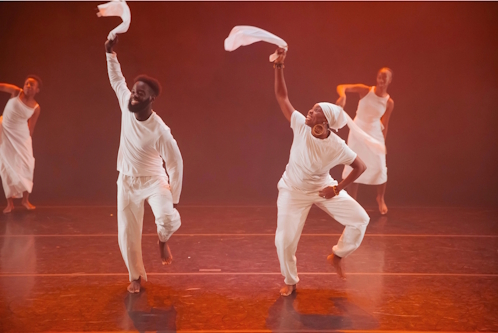
Photo Mateaphotography
This sense of ceremony developed into the lively Processional, featuring twenty-eight dancers dressed in white, accompanied by four drummers. The atmosphere changed from quiet contemplation to vibrant celebration as the dancers filled the stage with movement. The choreography was energetic and engaging, with a strong communal character. It felt at once like a traditional procession, a celebration and an invitation to join in the festivities.
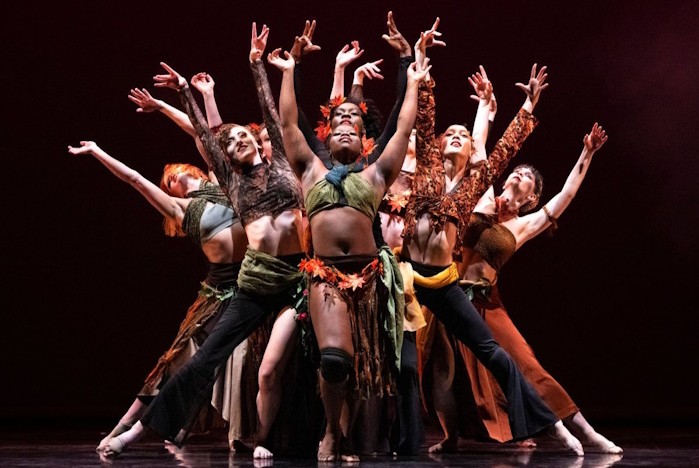
Daughters of Eve, choreographed by Dolly Henry MBE for BOP Jazz Theatre Company, offered a striking contrast. With its beautifully lyrical choreography and exotic, richly coloured costumes, also designed by Henry, the work suggested an imaginative vision of the Garden of Eden. Interestingly, both the costumes and the movement had something of the quality of classical Indian dance, although without its characteristic vocabulary of hand and foot gestures. Instead, it was the rhythmic and lyrical flow of the choreography, particularly through the arms and upper body, that created this impression.
The female dancers moved in forming and reforming circular patterns across the stage. There was a lovely sense of fluidity, as though the movement were reflecting water flowing or wind passing through trees. The choreography was soft, expressive and beautifully controlled, while the vibrant costumes added to the impression of an exotic, almost mythical garden. It was an attractive and thoroughly engaging work.
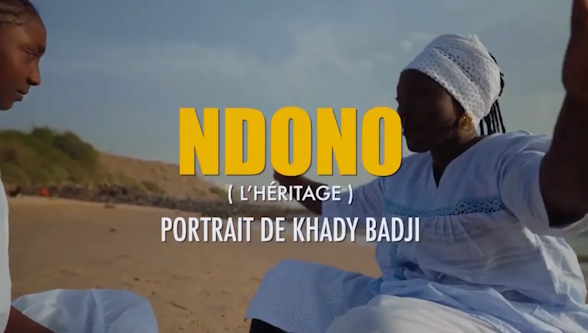
A short film, Ndono (2023), from Bakalama in Senegal, followed. Directed by Malal Ndiaye, it offered a brief but fascinating portrait of Khady Badji, a female dancer whose passion for dance had begun in childhood and continued into her professional career. Although lasting only around 7 minutes, it provided an interesting insight into a life shaped by dedication to dance. It was a pity that the programme did not identify Khady Badji by name, since this touching little film was devoted entirely to her.
The first half concluded with SHADE! (The Secret Dance of Trees), choreographed by C. Kemal Nance and performed by seventeen dancers from Artistry Youth Dance. This was an exuberant and joyful work, full of energy and enthusiasm. The young dancers were entirely committed to the choreography and were clearly enjoying every moment of their performance. Their pleasure was infectious, communicating itself directly to the audience and drawing us into the spirit of the piece.
The choreography explored the imagined movement of trees, particularly through the upper body, with arms and torsos suggesting branches responding to the wind. There were some interesting ideas here, although as the work progressed, the movement vocabulary became somewhat repetitive. The piece would have benefited from a little judicious editing. My principal reservation, however, concerned the costumes. The dancers wore relatively conventional dance trousers or leggings with brief tops, which seemed strangely at odds with the arboreal imagery of the work. More flowing lines, perhaps with fabric extending from the arms to suggest moving branches, might have enhanced the visual effect considerably. This was a pity, because the choreography offered considerable potential for imaginative visual interpretation. Nevertheless, the commitment, energy and obvious delight of these young performers made it an immensely enjoyable piece.
Following the interval, Home, performed by Impact Dance, brought another burst of energy to the stage. This was a lively, joyful and highly entertaining work, with particularly interesting choreography. There was a freshness and inventiveness to the movement, and a clear sense of thought behind its construction. The choreography made effective use of the dancers’ contrasting energies and the rhythmic possibilities of the music, creating a piece which was both engaging and great fun to watch. It was another fine example of the vitality and skill of the younger performers taking part in the festival.
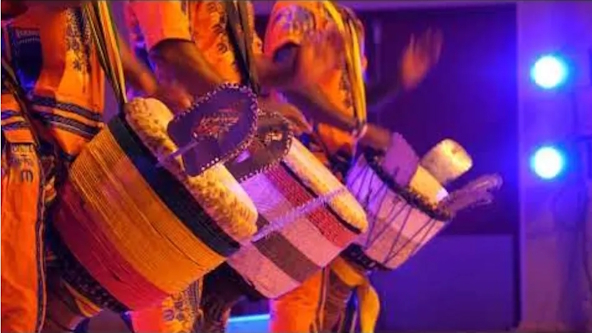
Photo Mateaphotography
The final substantial work was TAA MA, choreographed by Aissata Kouyate and presented by Kobe Na Awati. Described as a story of artistic coming of age, it followed the journey of a young woman leaving her village and discovering her potential as an artist.
Although dance was an important part of the storytelling, this was, above all, a work dominated by its extraordinary musicians. Four percussionists occupied the stage, three playing drums suspended from their necks, and the fourth a stationary set of drums. Their playing was quite phenomenal. Each musician was given an opportunity to perform individually, before joining the others in different combinations, creating an intricate and constantly changing tapestry of rhythms. The precision, dexterity and musical understanding of these players was quite remarkable. The speed and complexity of the rhythms was extraordinary, yet there was never any sense of effort or strain. Their musicianship was utterly absorbing, and the audience was treated to a superb demonstration of the expressive possibilities of African percussion.
The dancers entered and departed at different points, gradually developing the narrative of the young woman’s journey. Three younger performers, two men and a woman, were joined by an older female dancer. All were excellent, bringing considerable expressive and technical skill to their performances. However, it was the drumming which remained the overwhelming focus of the work. For much of its approximately twenty-minute duration, the musicians commanded the stage entirely, and deservedly so. Their performance was the undoubted highlight of the evening.
A grand finale brought the performers from the various participating companies back onto the stage. Each group offered a brief reprise of its work, together with occasional solos, before the entire ensemble joined in a final celebration, accompanied throughout by the drummers.
Remarkable throughout the evening was the extraordinary generosity of the performers. Whether dancing, drumming or singing, they gave themselves wholeheartedly to their work. The technical standards were high, particularly among the percussionists, whose musicianship was exceptional, but also across the different African and diasporic dance styles represented. Above all, there was an openness and warmth, the dancers did not simply perform for us; they welcomed us into their world and invited us to share their enjoyment.
Afro Dance Xplosion 2026 was a celebration in the truest sense of the word: occasionally untidy, sometimes exuberant to excess, but always engaging, generous and filled with life.