
Royal Ballet & Opera, London
June 5, 2026
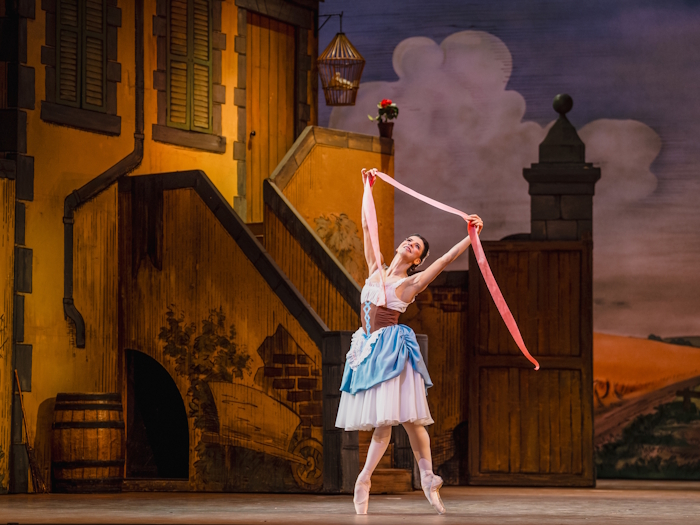
An affectionate portrayal of village characters and life, Sir Frederick Ashton’s La Fille mal gardée is really two love stories. Lise and Colas, of course, but also the choreographer’s love letter to the English countryside. Not just any countryside, though. When you add in Osbert Lancaster’s colourful designs, the picture is very suggestive of the gently rolling arable landscape of that part of Northern Suffolk that Ashton made his home. It’s a place of pastoral bliss, good humour and where the sun always shines. Well, almost, but even a thunderstorm passes quickly, just like any brief fallings out. It’s a joyous ballet it’s impossible not to love.
Making her debut as Lise, the wayward daughter of the title, Mayara Magri was technically flawless. Her dancing was a thing of beauty, her partnership with Leo Dixon’s Colas wonderfully assured. She very much lets the humour come from the choreography but while her portrayal grew on me over the evening, I found the characterisation difficult to really love.
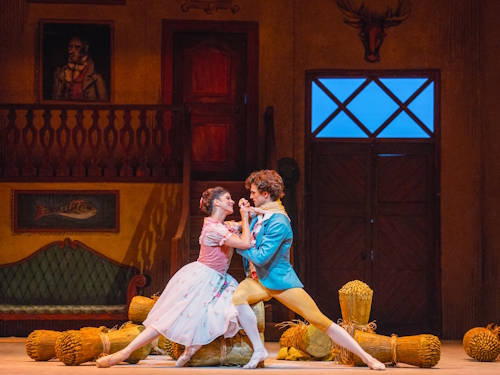
Photo Andrej Uspenski
Magri had some fine interplay with Thomas Whitehead’s Widow Simone, but she seemed sweet rather than playfully, even a little naughtily mischievous. There was also less of the slightly exaggerated facial expressions, things like rolling her eyes in disbelief when she realises Colas has seen her dream of having three children. While that sort of thing should certainly not be overdone, it does add to the character. On that dream, by the way, I am slightly surprised that Lise is still allowed to pretend to smack one her pretend children.
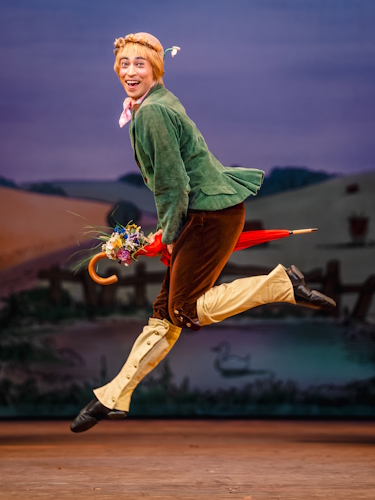
Photo Andrej Uspenski
Dixon, also making his role debut, was spot on as the easy-going Colas. No cocky swagger, just a young man with a lot of boyish, effervescent charm determined to get his girl. His personality shone through. He rejoiced in his multiple turns and, while a couple of lifts looked slightly uncertain, he dealt with the one handed ‘bum lift’ as if it was the easiest thing in the world.
I’ve always considered Alain to be something of a sad individual, someone who is shy and rather awkward with others rather than a figure of fun, even if that is how the farm workers treat him at the picnic. It was super to see James Hay paint him in such a sympathetic light. By the end, it was impossible not to feel for him. At least he still has a friend in his red umbrella.
The subject of the new wooden pony cannot be avoided. Almost anything would likely be a come down after the real thing but it is rather disappointing, especially given some of the very lifelike animatronics that can be seen elsewhere in the West End. Apart from the fact it’s very obviously pushed around on a wooden platform, it looks a shade too small and its head is far too busy. And as for its gait, I can only assume the makers didn’t spend much time watching real equines. Would it have been better to have taken another approach entirely, I wonder. As cute and full of the ‘ahhh’ factor as Oscar and Peregrine were, a pony of any sort is hardly essential to the story. I guess we’ll all get used to it, though.
The change stems from a Royal Ballet and Opera decision to retire the use of live animals from all future productions, which leads me to muse about how they might deal with Ashton’s The Two Pigeons, should it every return to the repertory.
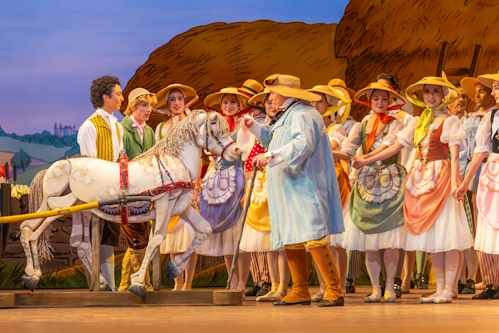
Photo Mihaela Bodlovic
John Lanchbery’s cheery arrangement of Ferdinand Hérold’s score, which comes with a few additions of his own, fits everything perfectly, although the tempi did seem a bit laboured here and there.
Good humoured, a ballet full of smiles and characters that you want to warm to. In that sense, it’s something of an outlier these days. But a dose of sunshine is just what’s needed on occasion. It’s a ballet it’s impossible not to love.