
The Royal Ballet and The Royal Ballet School
Linbury Theatre, Royal Ballet & Opera, London
November 3, 2026
Dame Ninette de Valois believed passionately that ballet should be about far more than steps. For her, it was a complete theatrical experience, embracing costume, lighting, music, scenery and, perhaps most importantly, storytelling. Having danced with Diaghilev’s Ballets Russes, she brought with her a profound understanding of the narrative and dramatic traditions of ballet, qualities that became central to the distinctive British style she helped establish.
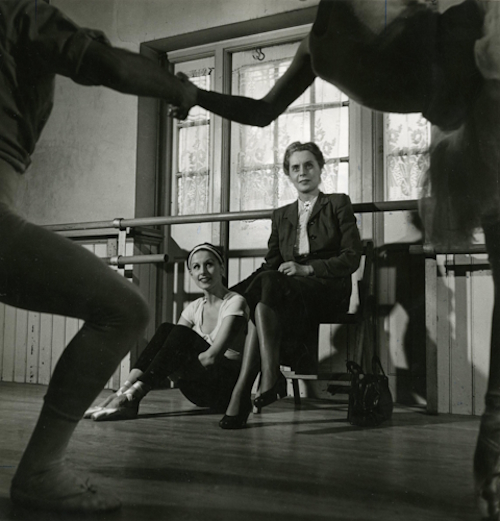
Dame Ninette de Vaois, teaching in the studio
Photo Roger Wood
It was this remarkable legacy that Madam, an intimate and beautifully conceived celebration of de Valois and the centenary of The Royal Ballet School, sought to honour. Founded in 1926 as the Academy of Choreographic Art, the School was the beginning of an extraordinary journey that would transform British ballet.
Curated by Kevin O’Hare and Lauren Cuthbertson, the programme brought together eleven performances, including six solos choreographed by de Valois herself, interspersed with short films featuring former dancers and students reflecting on the woman universally known as ‘Madam’. The films were among the evening’s particular pleasures. Quiet, intimate and often wonderfully revealing, they featured recollections from such distinguished figures as Monica Mason, Antoinette Sibley and Wayne Sleep.
Sleep’s account of being asked by Madam to dance a role with just a week’s notice, followed by a rehearsal with her only half an hour before curtain-up, was particularly delightful. These personal memories brought de Valois vividly to life, offering a fascinating insight into her character, expectations and extraordinary influence. They made the evening something rather more special than a conventional programme of ballet excerpts.
The dancing opened with The First Voice, choreographed by Jessica Lang and performed by students of The Royal Ballet School.
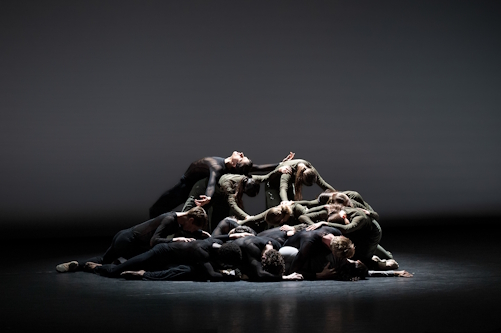
Photo The Royal Ballet, Camilla Nervi
This was followed by Peace with Honour, a new work by Soren Chisholm, a student in the School’s Pre-professional Year. Created for the 2026 Frederick Ashton Emerging Choreographer programme and subsequently selected for the Next Generation Festival, it is quirky, inventive and enjoyable. There are some intriguing ideas here, although I felt that the narrative needed further development. Indeed, there was sufficient promise to suggest that the piece might benefit from being extended, allowing its ideas and characters greater room to unfold.
Of the many pieces that followed, five stood out as particularly memorable.
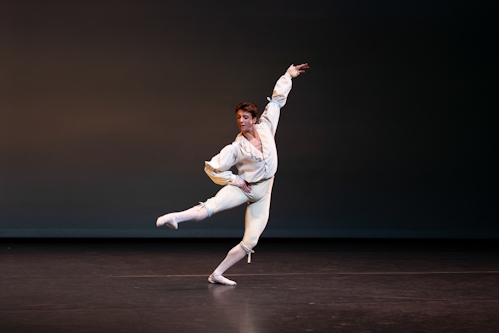
Photo The Royal Ballet, Camilla Nervi
De Valois’ Vestris was brilliantly performed by Caspar Lench. Inspired by a picture of the celebrated dancer Auguste Vestris, the solo was brought to life with tremendous humour, mischief and theatrical flair. Lench’s technical skill is formidable, but what made his performance so delightful was the way he inhabited the character. He transformed the inspiration of a two-dimensional image into a living, breathing personality, capturing all its humour and sense of fun. It was an outstanding example of precisely the theatrical imagination de Valois valued so highly.
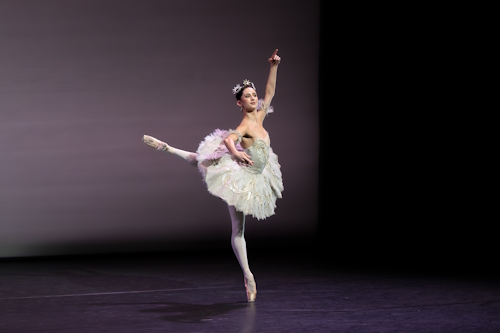
Photo The Royal Ballet, Camilla Nervi
Equally impressive, although entirely different in character, was Aurora Chinchilla’s performance of Aurora’s variation from Act III of The Sleeping Beauty. Her dancing was beautifully controlled, technically assured and exquisitely aligned with the music. Yet it was the characterisation that elevated the performance. This was not simply a perfectly executed classical variation; Chinchilla conveyed the sense of a princess emerging into a completely new life, with all the excitement and wonder that implies. Every movement seemed to belong to the character and the music. It was beautiful and deeply satisfying.
The outstanding performance of the evening was the pas de deux from Wayne McGregor’s Chroma, danced by Marcelino Sambé and Anna Rose O’Sullivan, however. It was nothing short of a masterclass.
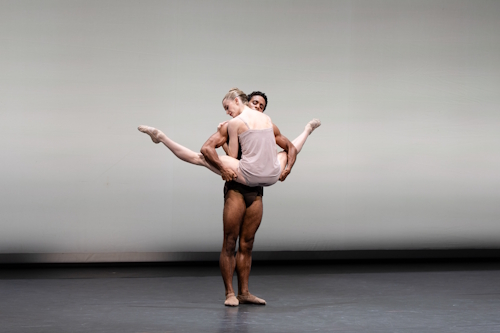
Photo The Royal Ballet, Camilla Nervi
McGregor’s choreography, created in 2006, represented a radically different approach to classical dance when it first appeared, challenging established ideas about movement, and physicality. Twenty years later, it remains astonishingly fresh and innovative, a choreographic voice not merely for the twenty-first century, but surely beyond.
Sambé and O’Sullivan were breathtaking. They inhabited the choreography so completely that the immense technical demands appeared almost effortless. Intricate, physically challenging movements seemed simply to flow from their bodies, while their extraordinary musicality brought dance and score together as though they were a single entity. There was no sense of dancers concentrating on difficult steps; rather, the choreography seemed an entirely natural expression of their characters and their relationship. The technical brilliance was unquestionable, but it was their complete immersion in the work that made this such an exceptional performance. Quite simply, outstanding.
The programme’s selection of de Valois’ own choreography provided a fascinating opportunity to reflect on how her dramatic intentions are interpreted by today’s dancers.
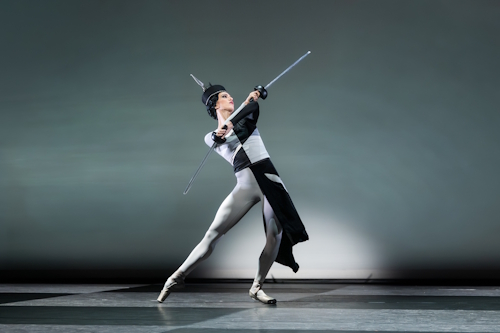
from Dame Ninette de Valois’ Checkmate
Photo The Royal Ballet, Camilla Nervi
Nadia Mullova-Barley’s Black Queen solo from Checkmate was a case in point. One of the preceding films had explored the character, particularly the sword dance, describing a formidable female figure possessing both the aggressive, traditionally masculine qualities of a warrior and a powerful sensuality. Mullova-Barley captured the sharp, combative qualities extremely well. Her performance was technically accomplished, with a commanding physical presence. However, I felt that the sensual dimension of the character was largely absent. Without it, the Black Queen lost something of the complexity and dangerous attraction that de Valois had intended. This was expert dancing, certainly, but not quite the fully realised dramatic character.
A similar reservation applied to Luc Foskett’s Red Knight, also from Checkmate. His dancing of the demanding choreography was technically strong, but the character never fully emerged. There was a sense that his concentration was directed towards getting the steps absolutely correct, perhaps with a little nervousness on such an occasion. Consequently, the dramatic dimension of the role remained somewhat elusive.
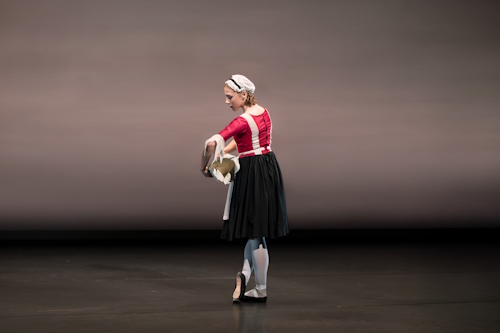
from Dame Ninette de Valois’ The Rake’s Progress
Photo The Royal Ballet, Camilla Nervi
By contrast, Olivia Findlay’s performance as the Betrayed Girl from The Rake’s Progress provided the fourth of the evening’s outstanding moments. Created by de Valois in 1935 for the Vic-Wells Ballet, this work remains a powerful example of her gift for storytelling. Findlay was quite beautiful in the short solo. Every movement conveyed the girl’s emotional devastation, her betrayal expressed not through exaggerated gesture but through an extraordinarily sensitive and deeply felt interpretation. She told her story slowly, quietly and with the utmost conviction. There could be no doubt about her character’s suffering, and it was impossible not to feel for her. This was a moving vignette, superbly performed, in which dance and dramatic expression became inseparable.
Two further solos from de Valois’ Job: A Masque for Dancing offered an interesting contrast. Marco Masciari, dancing Satan, gave himself completely to the role. He seemed to relish every moment, his entire physical presence communicating a flowing sense of malevolence. There was a genuine feeling of evil emanating from the character, and his commitment made the performance compelling. Martin Diaz, dancing Elihu, was also technically accomplished, but his interpretation was less arresting alongside Masciari’s commanding characterisation.
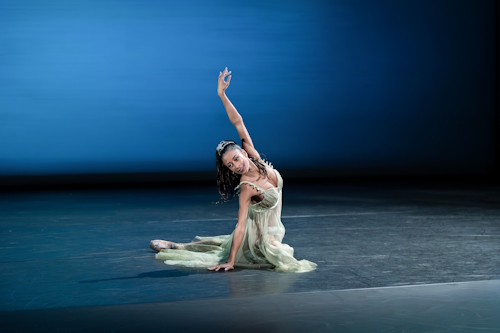
Photo The Royal Ballet, Camilla Nervi
The evening also acknowledged the choreographers who followed de Valois and expanded the repertoire of The Royal Ballet. Marianna Tsembenhoi brought a pleasing lyricism to her variation from Frederick Ashton’s Ondine. Her movement was fluid and beautifully executed, although I felt that something of the dramatic circumstances in which Ondine finds herself was missing. It was attractive dancing, but the character’s emotional world was not fully explored.
Yasmine Naghdi and Ryoichi Hirano similarly offered an elegant and lyrical interpretation of the pas de deux from Kenneth MacMillan’s Concerto, first performed in 1966. As a non-narrative ballet, Concerto naturally makes different demands on its performers, and their dancing was graceful and accomplished.
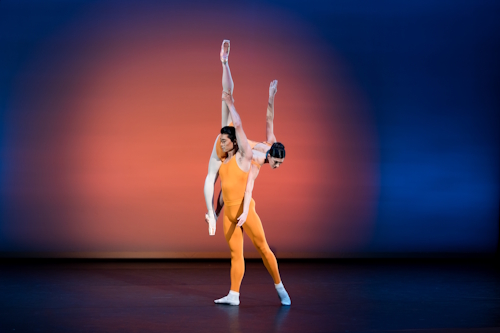
Photo The Royal Ballet, Camilla Nervi
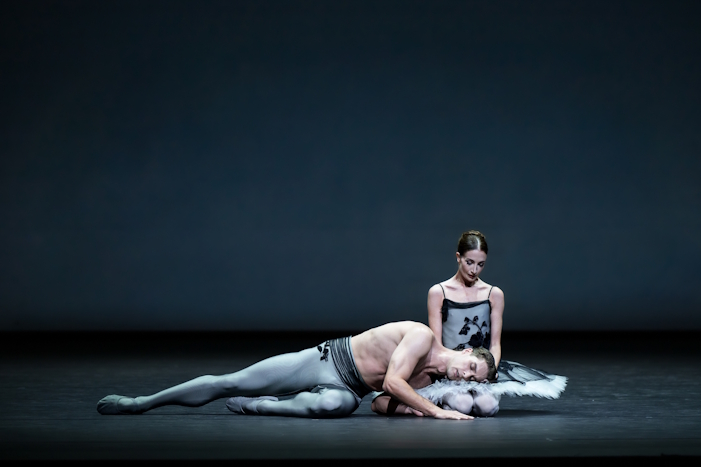
The evening concluded with the fifth outstanding performance, Lauren Cuthbertson and Lukas B. Brændsrød in Christopher Wheeldon’s Beautiful Shadow. Created for the recent centenary celebration of The Royal Ballet School on the main stage of the Royal Opera House, this is a visually compelling and deeply atmospheric work. Wheeldon’s choreography is inspired, creating a world of shadows, longing and dreamlike intimacy.
Cuthbertson and Brændsrød commanded attention throughout. Perhaps because the work had been created specifically for them, they appeared to inhabit every moment of it with absolute conviction. Their partnership was exceptional, their technical execution seemingly effortless, and the emotional atmosphere they created filled the stage. There was a haunting, almost otherworldly quality to their performance, in which movement, music and character became beautifully unified. It was an absorbing and memorable conclusion to the evening.
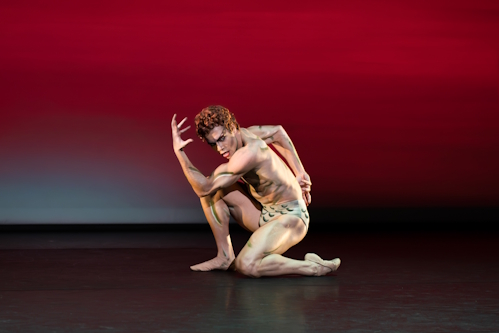
Photo The Royal Ballet, Camilla Nervi
Madam was an intriguing and thoughtfully assembled programme that demonstrated the continuing evolution of the art form she held so dear and helped nurture.
The standard of dancing throughout was exceptionally high. Yet the evening also raised an interesting question. De Valois believed passionately that ballet was not simply a demonstration of technical accomplishment, but a complete theatrical experience in which character and story were fundamental. In several performances, the technical excellence was beyond doubt, but the dramatic interpretation did not always reach the same standard.
Perhaps, in this centenary year, it would be timely to look afresh at this aspect of her legacy. Technical brilliance is extraordinary to witness, but when it is combined with a complete understanding of character, emotion and theatrical purpose, as it was in the finest moments of this evening, ballet becomes something altogether more profound.
Together with the wonderfully intimate film recollections, which offered such a compelling portrait of this remarkable woman, Madam was a fitting and deeply enjoyable tribute to Dame Ninette de Valois.
A century after the foundation of her School, her influence remains unmistakable. The challenge, and the opportunity, is to ensure that her belief in ballet as a complete theatrical art continues to flourish alongside the ever-increasing technical achievements of its dancers.