
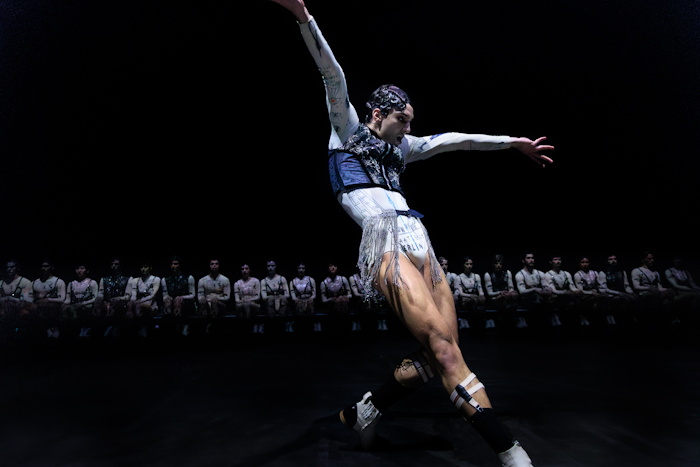
Schillertheater, Berlin
November 6, 2026
Invited by Christian Spuck to serve as artist-in-residence at the Staatsballett Berlin, Marcos Morau’s Wunderkammer pulses with dark extravagance and grotesque elegance. The work, which premiered in October 2025, also resonates deeply with the German capital as it engages with the history of the Weimar Republic.
Historically, Wunderkammern, or ‘cabinets of curiosities’, took shape in the mid-16th century, although wealthy rulers had long collected rare objects. As Europe’s princely courts became more stable and humanist philosophy spread, displaying wealth alone was no longer enough. Rulers were expected to demonstrate an intellectual command of the known world. Wunderkammern were exclusive, private collections of marvellous and unusual artefacts from different parts of the world, signifying their owners’ wealth, knowledge, and power.
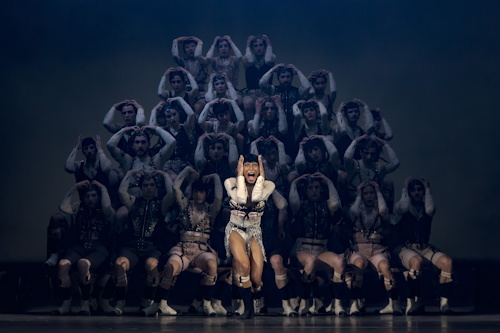
Photo Yan Revazov
For Morau, the Wunderkammer embodies the tension between fascination and power, and between wonder and appropriation. It is a space of discovery that also invites questions about otherness. He set out to create an eventful, imaginative world that would draw the audience between discomfort and joy. The result is successful, although I found the discomfort the far more pronounced of the two.
Unlike historical cabinets of curiosities, which were based on objects, Morau’s work focuses on immaterial experiences such as feelings, movement, and atmosphere. The stage becomes a container for a range of questions, much as historical cabinets housed a variety of objects, each with its own story, while contributing to a larger narrative of curiosity and wonder.
One fascinating aspect of the performance keeps grabbing the attention: the dancers’ eerie expressiveness as they take on the roles of monsters and demons, seemingly intent on frightening the audience away. They appear to come from another realm, a place where oddity is encouraged and scorn is valued.
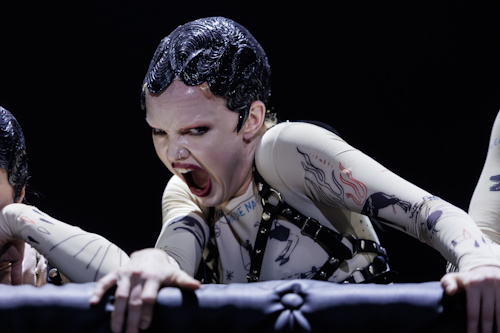
Photo Yan Revazov
The Staatsballett dancers are marvellous; not only in their dancing but also in their theatricality. Inara Wheeler is particularly remarkable, brilliantly inhabiting her role with a magnetic beauty and enchanting energy, alongside a bizarre, outlandish quality.
At times, the dancers form marvellous synchronised compositions; at others, they split into duets and solos. The large group’s simultaneous, varied movement creates a sense of wild, disorienting chaos. The accompanying soundtrack by Clara Aguilar and Ben Meerwein strongly contribute to the unsettling and confusing mayhem.
References to Weimar-era cabarets and contemporary nocturnal sanctuaries run throughout. The work’s surreal, quirky, and zany qualities evoke Berlin’s darker venues, which open up dimensions that are as strange and fascinating as they are amusing.
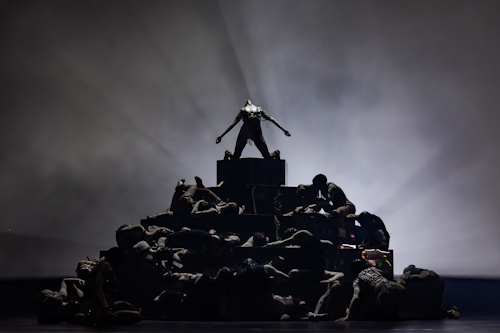
Photo Yan Revazov
The costumes by Silvia Delagneau, who has worked with Morau for years, including with his company La Veronal, are both peculiar and felicitous. For Wunderkammer, she has created an extravagant, dark fusion of gender-neutral fetish wear, historical variety-show attire, and futuristic club culture. The costumes reflect Morau’s inspiration from Berlin’s nightlife, bridging the gap between Weimar Republic cabarets and modern techno clubs.
Tops are paired with stark, dark elements, including black leather harnesses, corsets, straps, thigh-high black stockings, and sleek, shiny head coverings. In a highly unusual choice for classical or contemporary ballet, some dancers wear heavy padding around their hips and buttocks. This distorts their natural body lines, creating a surreal, genderless silhouette. The dark clubwear is contrasted with theatrical details such as balloon trousers, spats-style boots, and oversized avant-garde wigs.
The piece beautifully conveys strangeness and withering extravagance, challenging conventional ideas of beauty as it explores freedom, curiosity, and the tension between order and chaos. Morau has said that he was deeply inspired by the nocturnal worlds of cabaret and nightlife, where grotesque humour, playful exaggeration, and an aura of secrecy prevail; and where rebellion can emerge amid social and cultural upheaval. This was true of the Weimar period, when many cabarets and nightclubs opened in Berlin.
Wunderkammer questions social norms with a generous dose of cynicism and criticism, while also offering entertainment and temporary distraction. It courageously brings to the surface the unrest that permeates our lives, arising from events both near and far. Morau’s intention to question the course of history, the fragility of the social systems on which we depend, and wider political and social tensions comes through successfully.
The piece explores freedom, creativity, and the search for humanity in times of upheaval, as we are experiencing today. It also invites the audience to connect with their own ‘Wunderkammer’: the spaces within each of our lives, composed of memories, experiences, and dreams. These can illuminate the complex contradictions we inhabit while helping new understandings and breakthroughs emerge in response to what is happening around us.