
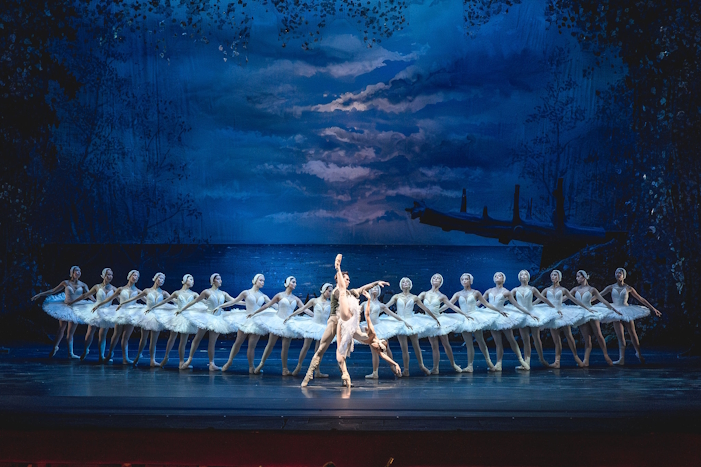
September 2027 sees the UK debut of Ballet de Santiago, now led by former Birmingham Royal Ballet principal César Morales Anderson. He chatted recently with David Mead about the company, Ivan Nagy’s Swan Lake, which they will be performing in London, and becoming a director.
“I think what Ballet de Santiago has that is special, is how they get to the audience. It’s always been the same. You really feel what they’re doing.”
César Morales Anderson says that’s precisely what happened when the company performed Swan Lake in Dublin in August, recalling how some people commented that, while they’ve seen other companies dance the ballet, they’ve never really felt it in the same way. “I think that’s because they really dance with the heart. That’s something that people in Latin America have. It’s a warmth that they always manage to get across to the audience. Sometimes dancers in big companies can have amazing technique, be great technicians, but they don’t get this response from the audience.”
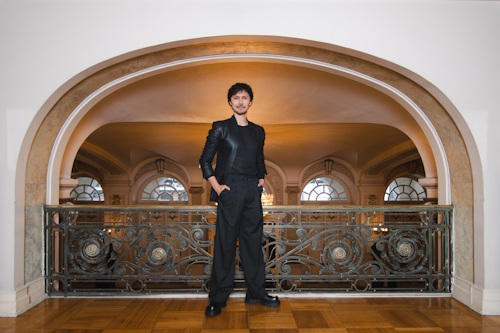
Photo Nicolas Quezada
London sees a lot of productions of Swan Lake. Morales Aderson concedes that the ballet will invariably invite comparisons. But when asked to bring Ivan Nagy’s production, he says he thought, “Well, we want to tour, so let’s do it. Yes, it is a challenge for the company but it’s something we have to do. I know it’s harder on tour, and harder when we come from so far away, but the company did very well in Dublin. I was very proud of them.”
He says that Nagy’s version has been something of a lucky charm over the years. It certainly has a special place in his heart. “Ivan gave me so much. He taught me the ballet himself.” It was also immediately after performing the ballet for the first time that he was first promoted to principal, aged just eighteen. Later, it led to his being invited to be guest principal in Vienna, where he danced Nureyev’s version. “Very long” he recalls. “I thought, maybe something magic is bringing me back to it.”
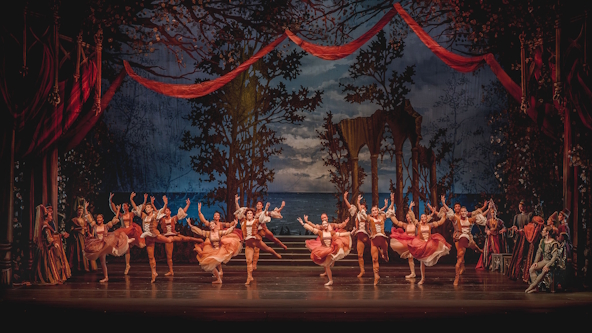
Photo Nicolas Quezada
Nagy’s is a very traditional Swan Lake, although audiences will spot some differences, Morales Anderson says. “More in the first and third acts because you really can’t change too much in the white acts except for maybe some patterns. People want to see what they expect. But first act, for example, I think you see a prince very close to Benno; more like friends. But more than anything, for me, it’s not that the choreography that is different but the approach of the dancers. You can see straight away their warmth. And then there is the beauty of sets, lighting and costumes, all from Chilean designers. You will see really see what we can do in Chile.”
While the company has also always been very good at telling stories, Morales Anderson says he is working to expand the repertoire to include both classical and contemporary ballet. This year has seen a new production of Pride and Prejudice by Kenneth Tindall, and Bodies of Division, a new work by James Pett and Travis Clausen-Knight, the latter staged alongside Frederick Ashton’s The Dream. Soon to come is William Forsythe’s The Vertiginous Thrill of Exactitude.

Photo Alberto Díaz
“What I want is for the dancers to be the most versatile that they can be. That why we’re doing new productions, new choreographies created on them. I think it’s very, very important to develop their careers as artists. I cannot just do storytelling because they are too good for only that. I need to push them in other ways if they and the company are to be the best they can be.”
Physically isolated by the Andes from even the rest of South America, Chile is perhaps not a country one immediately associates with ballet. “I think people don’t know us much because we are so far away,” says Morales Anderson. He remembers when he came to England to dance. “Everyone was asking where I was from. When I said, ‘Chile’, it was, ‘What?’ Like, ‘Where is that?’ But we have a beautiful, big opera house that has done concerts, opera and ballet for many, years. We have a big school that’s now working with the Paris Opera, as well.
His own discovery of ballet was accidental. He explains, “In my normal school, I always liked to paint, to sing. Anything to do with the arts, I loved.” It was while singing with a school group in a competition at the Opera House that he saw ballet on stage for the first time. “I was nine years old and I thought it was the most beautiful thing I had ever seen. I don’t think I understood anything, though.”

Archive photo
He remembers going home and trying to dance, not having much idea what he was doing. When he told his parents he wanted to learn ballet, they said no, thinking it was some sort of fad that would pass, that he would do for two weeks, then give up.
Then, the ballet school held auditions. “My older sister took me. I passed and got in with a scholarship. Now my parents couldn’t say no because they didn’t have to pay or anything. After that, I never stopped.”
After being spotted in Santiago by Ben Stevenson, there to stage a ballet on the company, he was offered a place at and subsequently trained at the Houston Ballet Academy. Now fifteen, he persuaded his parents to let him stop normal school and go. He says it opened his eyes in all sorts of ways, not least to the fact that the level of ballet in Chile was pretty good. Being so far away, it was hard to compare, he recalls. These days, with so much online, it is a lot easier, he agrees.
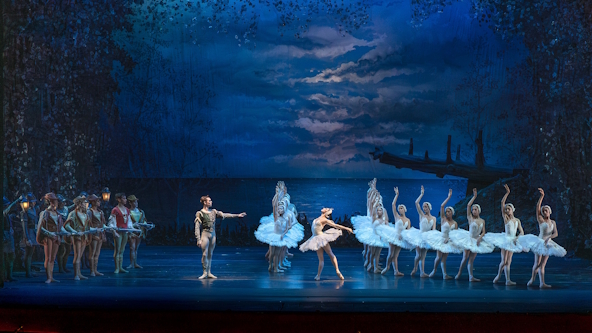
Photo Nicolas Quezada
Morales Anderson went on to dance for the Ballet de Santiago, then independently in Paris, Prague and Slovenia. “Little by little, my name was getting known, but I knew that freelancing wasn’t for me. I needed to be in a company.”
In London, circumstances led to a phone call to, and taking class at, English National Ballet. Invited to join the company, he stayed for five years before moving to Birmingham Royal Ballet, where he danced for fifteen years.
In Birmingham, director Carlos Acosta encouraged Morales Anderson to start coaching the principals and to take some rehearsals. “I enjoyed that a lot, being in the studio with the dancers and seeing them progress.” But did it lead to any ideas about stopping dancing and becoming a director? “No. No, no, no,” he insists. “I really never thought about it.”
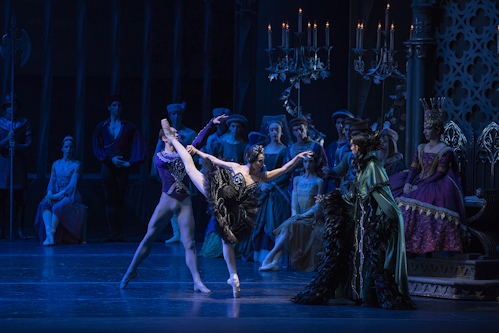
Photo Nicolas Quezada
Then, some dancers in Chile rang him with the news that the Ballet de Santiago was looking for a new artistic director. Persuaded to apply, he looked at the process as a learning experience. “To be honest, I didn’t think I would get the job. I thought I needed more experience. But the interviews started, and I’m going through and through, and there were less and less people. I felt, ‘OK, if it’s happening maybe it’s meant to be’. Then they called me and told me I had been chosen. The next day I said ‘OK, I accept’ and told Birmingham that I was going to leave. It all happened really fast.”
He says the transition from dancer to director has not been easy. “I still feel I’m a dancer in many ways. But what was good for me, was that all this change happened just in a week. I stopped dancing in Birmingham and just two days later, I started in Santiago. I didn’t have time to overthink it.”
Although he picked up much from the directors he worked with as a dancer, he says he’s still learning. “Things to do, and things not to do. How to communicate. I’m kind of shy, but I’ve had to learn to talk, to express things, to explain things. I think I’m better than I was, but it’s not something natural,” he says.
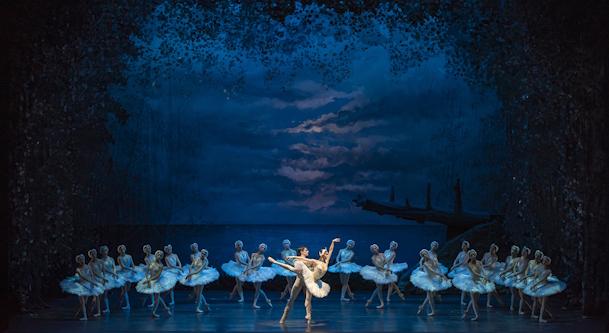
Photo Nicolas Quezada
“It is very, very different. It’s many, many hours, many meetings, trying to find the best for the company. Before, I would take decisions for my career. But now I have sixty dancers. My decisions affect all of them, so it’s not easy.” What he didn’t quite appreciate previously was everything going on the background. “Sometimes as a dancer, you complain a lot. A lot! But now I understand both sides.”
After taking up his new post, he says that he still took class initially, but that he’s not doing anything at the moment. Rehearsals can be different, though. “When we did The Dream, the first time that the company did Ashton, I was jumping around and showing everything because I thought it was easier that way for them to understand the style.”
Morales Anderson recalls working with Marcia Haydée, who directed Ballet de Santiago in the early 2000s, in particular. “Working with her was an amazing experience. She taught me a lot of things. She always loves what you’re doing. Even if it’s not strictly in the choreography, she wants you to do it. She was very free and open. She has amazing, incredible experience. She’s worked with so many amazing people and names. She always has some story to tell or other little thing to say that helps the dancers. I think she’s loved everywhere.”
I ask whether he has any ambition to choreograph himself. “No,” he replies instantly. “Honestly, I have so much respect for people who do choreography. You can be the best dancer in the world but that doesn’t mean you can be a choreographer. Sure, I can put steps together, but that’s not being a choreographer.”
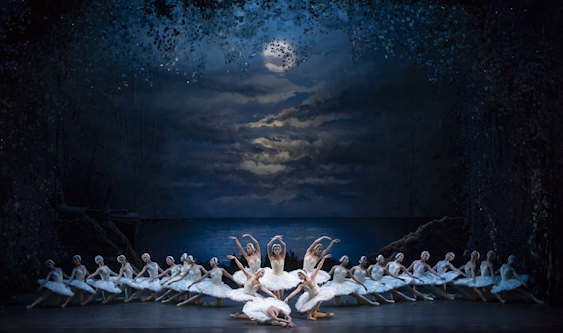
Photo Nicolas Quezada
Looking ahead, Morales Anderson is keen to expand the company, do bigger productions and tour more. “But more than anything, I want to improve even more the quality of the work. I know the artistry and all that will be there but I want the technique to get even stronger. I want us to be an elite company.”
Finally, returning to Swan Lake in 2027, when asked what he would like London audiences to take away from the production, he says, “First of all, I want them to discover Chile, the Ballet de Santiago and the Teatro Municipal because the level there is incredible.” While acknowledging people will make comparisons, more than anything, he wants them to enjoy the production and the dancing. “Really forget about everything and enjoy the moment because it’s going to be a beautiful show.”
Ballet de Santiago perform Swan Lake at the London Coliseum from September 21-25, 2027.