
The Place, London
April 10, 2026
PCK Dance’s double bill, Into the Light, does exactly what it says on the tin, opening in the darkness of Vessel, before emerging into the brightness of the hauntingly beautiful In the Absence.
Vessel hugs the hugs the black box stage. Amidst the mist, strips of light alternate in orange and white above the dancers, lozenges of luminosity chasing each other in a parody of the shapes that digital numbers create. James Pett and Travis Clausen-Knight are joined by Isabelle Evans in choreography is consistently interesting and in a comparatively brief amount of time covers a lot of bases. Evans’ costume is a bit odd, though, including a puff top with dangling fabric
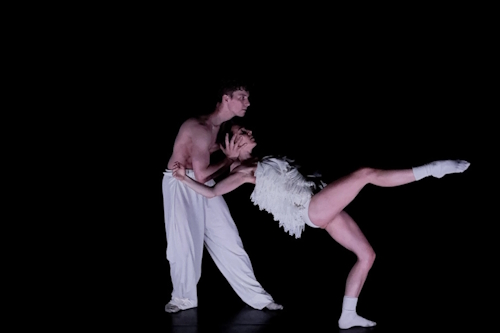
Photo Rueben Spencer
There are literal highs and lows as well as emotional ones. Whether the work communicates its aim of hinting at survival in an AI-driven future is questionable, however.
Sean Pett’s score sounds like a modern take of the pioneering Radiophonic Workshop output, but the synthesised sounds lack complexity, and the depth of tape loops, prepared pianos and the like. It is slick, but a bit too slick to hold the interest. Pett also controls the sound and lighting from a desk downstage left, its glowing lights proving quite a distraction from the dancers.
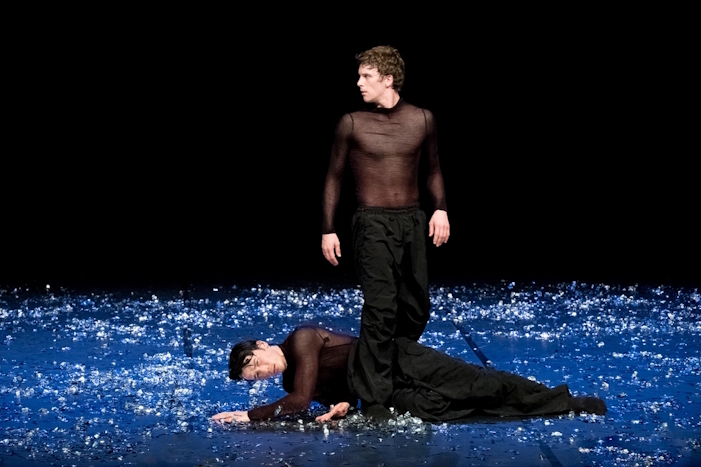
The light, in all senses of the word, is provided by In the Absence, which starts with a stage full of tinsel. Clausen-Knight and Pett pirouette and roll in and out of the glitter, feet describing rondes de jambes that create little rutted roads along which the dancers can move like joyous dogs romping in silvery snow.
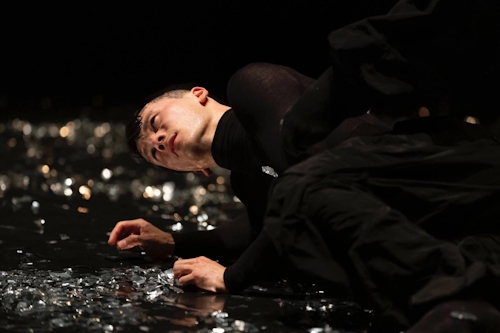
Photo Federica Capo
But this is an elegiac work. The recorded electronic music is replaced by Sean Pett on the piano as we realise that we are witnessing love and loss. Pett and Clausen-Knight rotate around each other connected only by their eye contact. Clausen-Knight teases us with his exquisite line as we see fleeting arabesques and gorgeous ports de bras.
After a somewhat dystopian opening, albeit where humanity appears to triumph as the trio of dancers are united, In the Absence leaves the audience feeling oddly uplifted, sprinkling a little of its shine on us in these dark and dismal times.