
Linbury Theatre, Royal Ballet & Opera, London
May 14, 2026
Such are the consciousness and headlines dominated by the major US ballet companies, New York City Ballet, American Ballet Theatre, San Francisco Ballet and the like, it’s all too easy to forget that there are numerous other excellent companies across the country. Tulsa Ballet, making their first visit to the UK, demonstrated the sort of quality they often offer in an excellent Made in America programme of diverse influences that showed the versatility of the dancers.
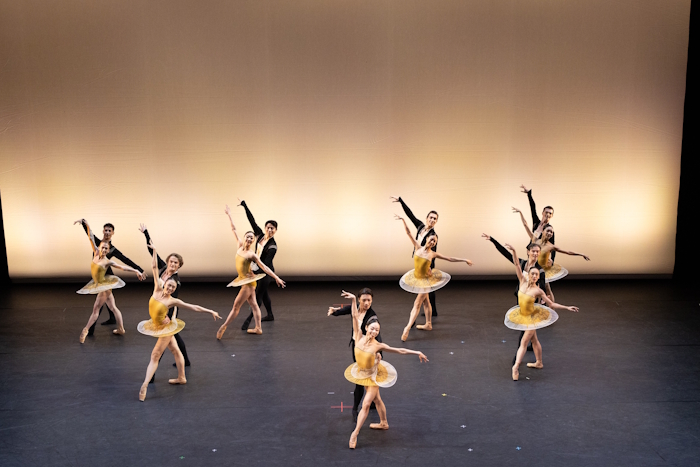
Set to a Prokofiev score, Yuri Possokhov’s Classical Symphony explores the choreographer’s s childhood reverence for the art form and is dedicated to his ballet teacher.
Brimming with energy, the ballet sets off like a train and doesn’t let up. While there is a bit of a contemporary edge, it’s a real feast classical choreography. And it was superlatively performed. Fast footwork, great leaps and turns, speed and attack abounded. Buoyant and bouncy, sometimes literally as the dancers disappear into deep pliés from jumps before taking off again, it’s a real crowd-pleaser,
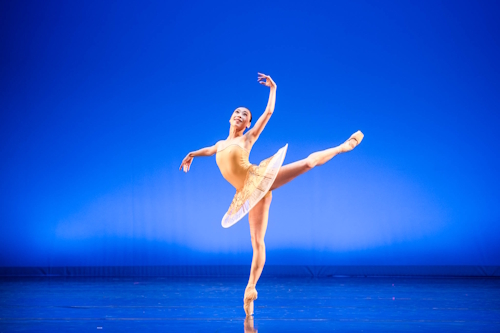
Photo Kate Luber
With the men in black and the women in the sort of two-layer, saucer-like tutus seen in many of William Forsythe’s older works, the dancers all showed superb technique, eating up the Linbury Theatre stage. Slightly exaggerated at times, the choreography allies grandiosity with a touch of irony. One suspects it’s as much fun to dance as to watch.
Among the many highlights is a section that sees the men repeatedly cross the stage in a series of leaps. It was thrilling and terrific, as were leads Edward Truelove, from Filey in North Yorkshire and a product of the Northern Ballet Academy, and Aina Oki.
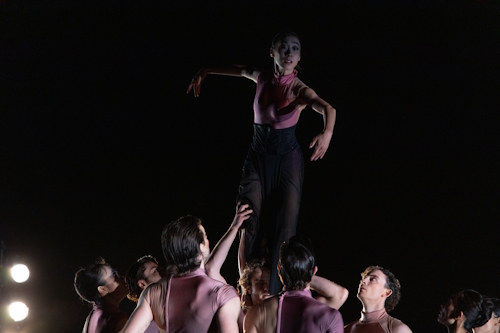
Photo Jessie Kenney
Nicolo Fonte’s Divenire (it means ‘to become’ in Italian) is very different in mood. Inspired by the energy and calm found simultaneously in nature, it’s a gently lyrical ballet of great patterns that constantly seem to swirl, break apart and reform. The opening section, danced on demi-pointe, is particularly complex, the choreography adding layers to Ludovico Einaudi’s repetitive melodies.
Made in America closed with Hamilton Tony award-winning choreographer Andy Blankenbuehler’s Remember Our Song, which tells of seven World War Two submariners and how they long to return to their loved ones.
The choreography neatly and seamlessly blends ballet and Broadway-style dance, with a dash of period social dance of the time. It is at times quite poignant, especially a dance to ‘The Call’, written by Regina Spektor, and that features in the finale and closing credits of the Disney film, The Chronicles of Narnia: Prince Caspian. As the women left behind hold letters, we hear, “You’ll come back when it’s over, No need to say goodbye” in the tear-jerking chorus. That mood is written in the dance too.
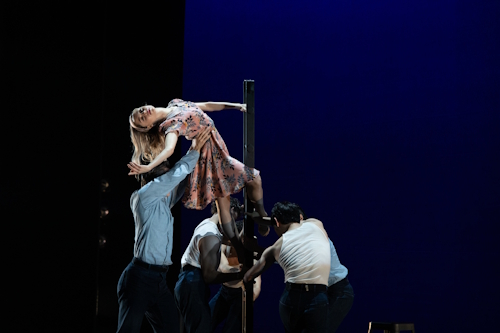
Photo Jessie Kenney
However, while a ping in the early music hints at being aboard the vessel, there’s little sense of the claustrophobia the men must surely have felt. There is some clever use of a ladder, though. Knowing the setting, when it rises above the stage, there really is quite a sense of the submarine diving. But would you get it otherwise? I’m less convinced.