
The Place, London
May 2, 2026
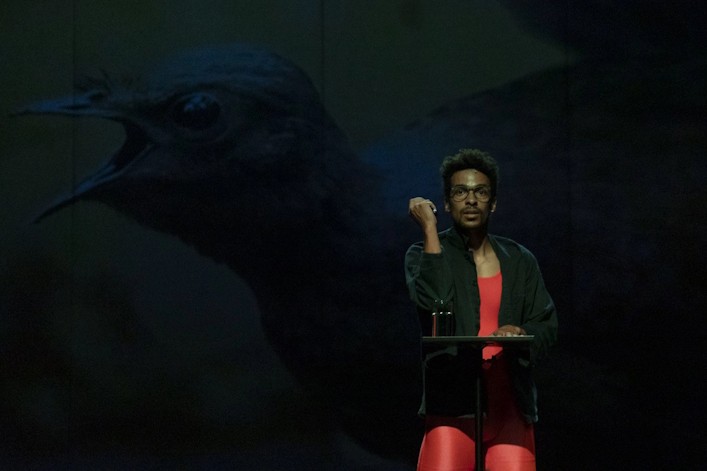
Following a sold-out UK premiere in 2025, Liam Francis Dance Company returned to The Place with Lyre Liar. A solo work performed by the choreographer-director, the piece traces his journey in dance, moving between performance and personal reflection.
Lyre Liar moves across hip hop, ballet and contemporary dance, taking on a structure somewhere between a mixed bill and a lecture demonstration. This allows Francis to shift easily between dancing, speaking, and demonstrating, giving the audience a clearer sense of how movement is learned, embodied, and reworked over time.
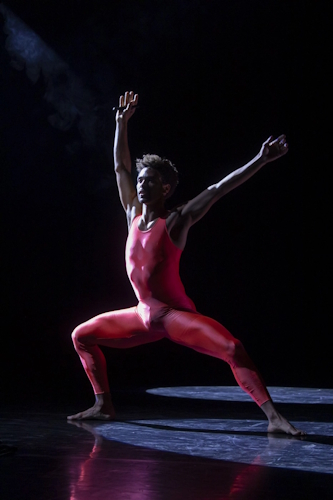
Photo Lee Baxter
The work is grounded in Francis’s engagement with dance lineage. He revisits excerpts from three works that have shaped his dance career: Into the Hoods by Kate Prince, RainForest by Merce Cunningham, and Faun by Sidi Larbi Cherkaoui. Combined with text developed in collaboration with Ben Duke, these sections bring together context and personal reflection, allowing the histories behind the works to emerge more clearly.
Like many dance artists, Francis’s practice grows out of a process of training, absorbing, and reinterpreting existing styles. Lyre Liar brings this process into view, tracing how artistic identity develops through embodied knowledge and lived experience.
The metaphor of the lyrebird, an animal known for its ability to mimic, feels particularly fitting, here framing the dancer as both imitator and creator. Through repetition and demonstration, Francis shows how he works within another choreographer’s style while gradually developing his own.
His performance is striking throughout. His movement is fluid and grounded, supported by a strong sense of control across different styles. Showing the strength of his training as he moves with both precision and ease. He shifts easily between the precision of Cunningham, the sensuality of Cherkaoui’s Faun, and the theatrical energy of Kate Prince’s work, remaining engaging to watch throughout.
Many dance works are experienced through observation. In Lyre Liar, the experience feels more direct and personal, as Francis speaks to the audience and shares his own story. He builds a strong connection with the audience. Through direct address, humour, and moments of interaction, he creates a sense of intimacy that draws people in. The audience becomes part of a shared exploration of what it means to build a life in dance.
The final section draws these strands together, as elements from his past return in a more personal form. In this moment, we see the dancer as he is now, his movement language coming into focus and settling into a style that feels distinctly his own on stage. At the same time, it suggests a future trajectory full of possibility, with a practice that is likely to continue evolving and engaging a wider audience. In turn, the work hints at how his movement may be taken up, reinterpreted, and carried forward by future dancers.
For audiences with a background in dance, the work speaks to a shared understanding of training and artistic development, evoking personal memories and a sense of connection with Francis’s journey. For those less familiar, Lyre Liar offers an accessible way into how dance is made and passed on. As the performance comes to an end, the entire audience rises to their feet, applauding, tribute to Liam Francis as an artist and to the work itself.