
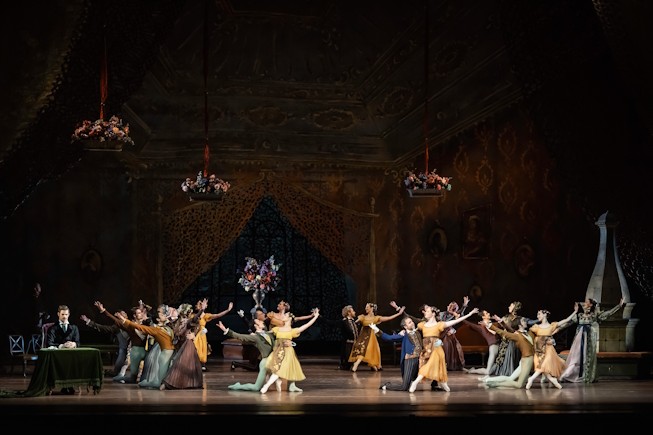
On February 23 at the Regensburg Theatre in Germany, prominent set and costume designer Jürgen Rose, known by dance lovers for his outstanding work with John Cranko and John Neumeier in particular, will receive the Lifetime Achievement Award at the 2026 Opera! Awards, which honour outstanding artists, creatives, and institutions in twenty categories. Jeannette Andersen recently visited Rose in Munich and talked to him about his work.
Jürgen Rose has staged operas, and created sets and costumes for over 300 productions for theatre, opera and operetta, including forty for ballet. Most famous are his designs for John Cranko’s Onegin and Romeo and Juliet, and John Neumeier’s Nutcracker, Illusionen – wie Schwanensee and Kameliendame, which are still used today, despite those for Cranko’s ballets being more than sixty years old, and some of those for Neumeier’s around fifty.
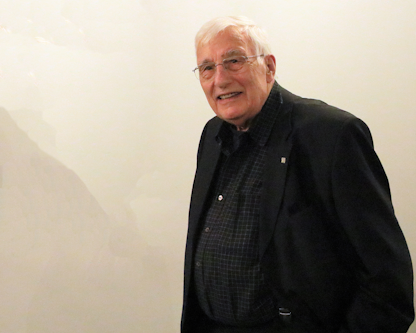
Photo Wilfried Hösl
Although he turns 90 next year, retirement is not on Rose’s agenda. The week before I visited him, he was in Dresden looking at his sets for a restaging of Onegin, and the day after the award festivities, he will return there. The day we talked, he had just corresponded with the Royal Swedish Ballet in Stockholm about them using his sets for the same ballet.
Irresistibly charming and a spellbinding storyteller, Rose took me on an enchanting trip through his career. People long dead came alive, costumes and sets materialised through his vivid descriptions, and each production was placed within the year of its creation.
It was not in Rose’s cards that he should become a famous designer in the world of the theatre. He recounts, “I was the oldest son of a large-scale farming family, and I was supposed to take it all over. But all I wanted, from a very early age, was to become an actor, to do theatre. Right after high school I did an apprenticeship at the theatre in Darmstadt. To avoid military service, I then went to Berlin and joined an acting school. Then I happened to get at job at the theatre in Ulm in a double position as set and costume designer for fourteen productions a year, and as an actor.”
An invitation to work for the Kammerspiele Theatre in Munich soon followed, and then he was invited to do As You Like It in Stuttgart, where, now 24 years old, he met John Cranko in 1961.
It was a ground-breaking experience for Rose. Cranko became, and remains, one of the most important and influential people in his life. Rose says, “I met Cranko in the canteen, where he sat doing his crossword puzzle. Curious as he was, he asked, ‘Who are you? What are you doing here?’ I showed him my sketches. Within our first hour together, he said, ‘We have to work together.’ I did not get the commission for his first piece in Stuttgart, The Prince of the Pagodas. At the theatre they said, ‘Who is this Rose?’ But for his next production, Romeo and Juliet in 1962, John said, ‘I only do the ballet if Rose does sets and costumes.’ So, I got the job.” Rose was then 25 years old.
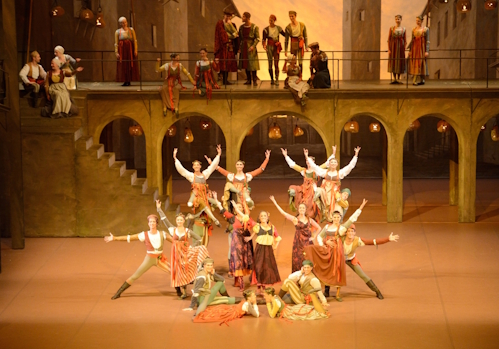
Photo Stuttgart Ballet
Working with Cranko became one of the most important learning experiences in Rose’s career. Cranko had seen his sketches for Romeo and Juliet and was very happy with them. Ambitious as he was, Rose spent a week doing the technical drawings. He remembers, “When John saw them, he took them and tore them to pieces. He said, ‘This everyone can do,’ which of course is not true, ‘What I want to see is your line.’ It was a shock. But John wasn’t just being mean. He sat down, smoked one cigarette after the other, until I had made some free-hand drawings. At last, he said, ‘That is yours now.’ John really had this special ability to see people’s talents.”
After Romeo and Juliet, Rose did sets and costumes for Cranko’s Firebird, Swan Lake and Onegin, followed by Poem de l’Extase, which the choreographer created for Margot Fonteyn. Rose remembers, “Fonteyn came to Stuttgart just to dance in this ballet. She was already 60 and was carried around by the young, good-looking men in the company, and I did these Klimt-like sets.”
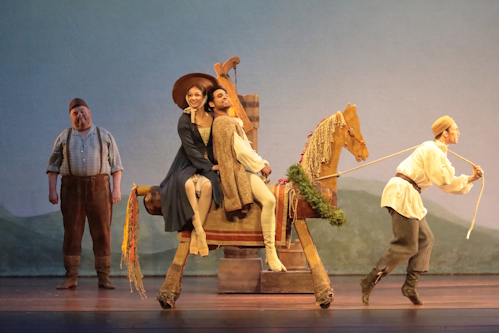
(pictured: Laurretta Summerscales and Yonah Acosta, Bayerisches Staatsballett)
Photo Wilfred Hösl
Rose continues, ‘When Cranko did the operetta The Merry Widow, he said, ‘I make it for you only.’ He used all the dancers in the ballet company, enabling me to create a feast of Parisian flair with the sets and costumes. Initials R.M.B.E. was an homage to his four favourite dancers, Richard (Craigun), Marcia (Haydée), Birgit (Keil) and Egon (Madsen). His last piece was Spuren, for which I also did sets and costumes, but the Stuttgart audience booed the piece, which hurt Cranko deeply.’
Early in his career, Rose also started to work with John Neumeier. Among others, he created sets and costumes for his Nutcracker in 1971 and Illusionen – wie Schwanensee in 1976. Both ballets have been performed by the Bayerisches Staatsballett this season with Rose’s sets and costumes.
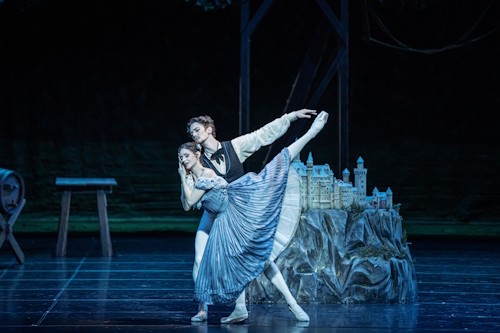
(pictured: Ksenia Shevstova and Julian MacKay, Bayerisches Staatsballett)
Photo Nicolas MacKay
The two Johns were different personalities with different working methods. Rose recalls. “Neumeier is very particular and has a strong opinion about what a piece is going to look like. With Cranko it was different. He never told you what to do. Instead, he might say, ‘Why don’t you look at this painter and study the renaissance period in Florence.’ He was very open and rarely changed things.”
Normally dancers are not too keen on costume fittings. It involves a lot of standing around and is a little boring. But Marcia Haydeée, who came to Stuttgart at the same time as Rose, and who was a principal dancer with Stuttgart Ballet and later company director, once said that when Jürgen came, the dancers would line up for fittings. Rose ascribes this to the fact that, “I always wanted to be an actor and, for me, the person, the personality, the human being, is always the most important on stage, more important than the room. I spent hours telling the dancers stories about the ballets and their characters at the fittings.”
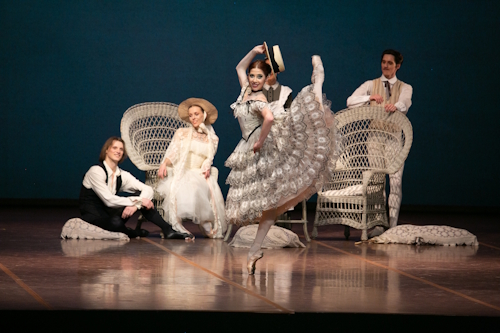
designs by Jürgen Rose
Photo Katja Lotter
From 1973 to 2000, Rose was professor at the Staatliche Akademie der Bildende Künste (State Academy of Fine Arts) in Stuttgart, teaching stage and costume design. “Cranko wanted me to move to Stuttgart. Therefore, he wanted me to apply for a job as professor at the Akademie. I got the job a few days after his death but I said no, I do not want to do it, but in the end, they persuaded me, and I stayed on for 28 years. The work with the students was intensive and exciting.” For Rose, the most important thing to pass on was a lesson he had learned from Cranko. “I said, you have to be yourselves. You have to find your own way of expression.”
Rose also created sets and costumes for Antony Tudor, Kenneth MacMillan, Celia Franca and Heinz Spörli in theatres all over the world. He adds, ‘For Marcia Haydée I did Sleeping Beauty in 1987. Stuttgart Ballet still dances it with great success, and in 1992, under her directorship, I did new sets and costumes for Cranko’s Romeo and Juliet, which the company still uses.’
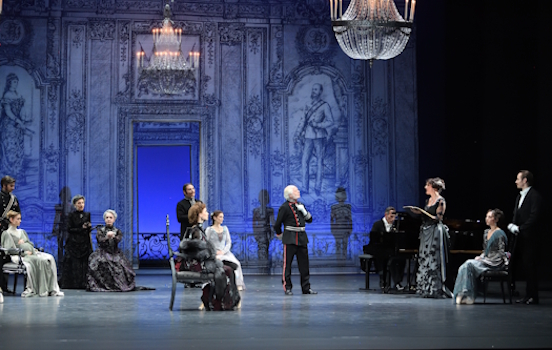
for Stuttgart Ballet’s 2019 production of Kenneth MacMillan’s Mayerling
Photo Stuttgart Ballet
Most famous are the ballets Rose did for Cranko and Neumeier, though. The last he had done was Neumeier’s Cinderella Story in 1992. But then, many years later, Stuttgart Ballet artistic director Tamas Detrich asked him to do the sets and costumes for a new production of MacMillan’s Mayerling. Rose did not want to do it, never before having designed for a ballet without having the choreographer at his side.
“For over a year I refused.” But then Dietrich asked Marcia Haydée to try and persuade him otherwise. “Marcia invited me and I stayed at her place. One morning she entered the kitchen and said, ‘Last night, I dreamed about Cranko. MacMillan stood behind him and Cranko said, Jürgen has to do Mayerling.’ I just looked at her and said, ‘When you come up with this kind of trick, I will do it, but you have to dance the old Dutchess, Rudolf’s mother.’ She answered, ‘I will do it, but I want the longest train ever.’ That was how it came about.” The premiere in 2019 was a great success, and Stuttgart Ballet performs it again this season
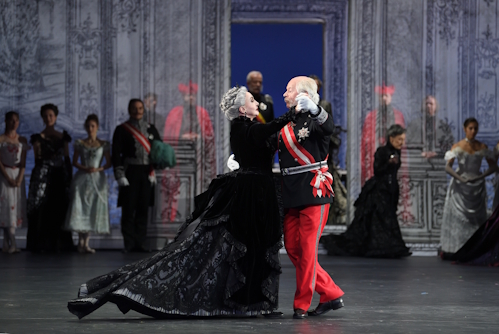
Photo Stuttgart Ballet
Intensive research followed. Rose visited all the places Archduke Rudolf had lived. “This was my first ballet production that was not based on a literary text, but on real people. There were even photos of them. When I saw the old photos in black and white, it gave me the idea to do the ballet in black and white too, like those old images. Of course I could not do it completely in these two colours, you would not have been able to see the characters, but the colours are very reduced.”
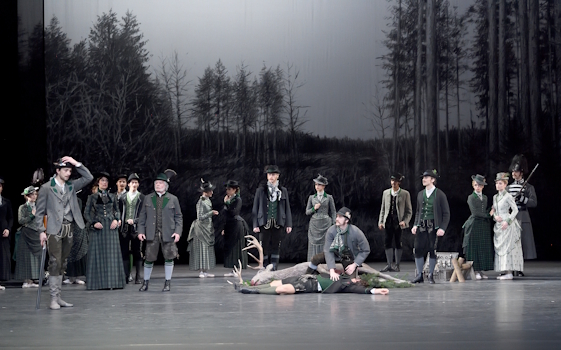
Photo Stuttgart Ballet
Three years later, in 2022, Rose did the sets and costumes for Edward Clug’s new production of the Nutcracker for Stuttgart Ballet. “I did not want to do it, but then I met Clug and it was very amicable, so I ended up doing it.”
Rose is a prolific and obsessed workaholic. In 2015, The Deutsche Theater Museum in Munich, in collaboration with the Bayerische Akademie der Schönen Künste (Bavarian Academy of Fine Arts) honoured Rose’s life achievements in an exhibition with 150 of his original costumes, and numerous designs, sketches and models. Four years later, the museum acquired 3,642 graphic sheets and 111 models, and there are many more.
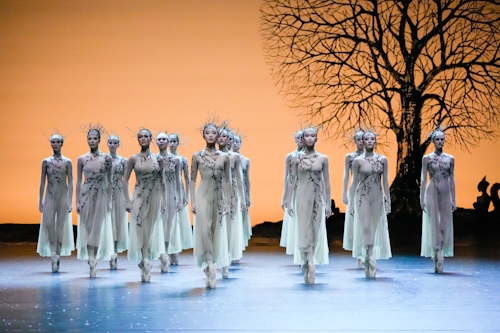
Photo Roman Novitzky, Stuttgart Ballet
In January, the Bayerisches Staatsballett in Munich performed Neumeier’s Illusionen – wie Schwanensee, a crowd-pleaser, to standing ovations. On February 28, the company presents Cranko’s Onegin and the 2010-seat opera house is almost sold out. Rose explains the success, especially of Onegin this way. “I think it is because Cranko was so simple, so minimalistic. With very little means, he characterises a person. Seeing his ballets is like reading a novel. They offer so much room for your own imagination.”
And then of course there are Jürgen Rose’s wonderful period, but therefore never aging, sets and costumes.