

That’s flamenco says London Flamenco Festival director Miguel Marin, who talks to David Mead ahead of the festival’s 20th anniversary edition.
He continues, “To me, flamenco is both a deeply personal and a communal expression; a way of telling truths that don’t fit neatly into words. It speaks of joy and pain, of resilience and rebellion. It’s a cultural legacy born from the margins that continues to evolve and surprise.”
While flamenco can be visually and emotionally captivating, at its core, it’s about truth, Marin believes. “Artists are not trying to entertain but to express something deeply real. At its best, flamenco moves you, challenges you, awakens you. It’s this balance between tradition and experimentation, spectacle and depth, that gives flamenco its power.”

at Sadler’s Wells during the London Flamenco Festival
Photo Paco Barroso
Given he promotes flamenco festivals in New York, Miami, Boston, and other cities in the US as well as in London, it’s a little surprising to learn that Marin does not come from a flamenco or even a theatre background. “My path began in New York, while studying arts management. Ironically, being far from Spain made me see flamenco’s power more clearly, how it connects across cultures and languages. That experience sparked a mission: to create platforms where flamenco could be shared with international audiences and valued as a living, expressive art form.”
Each city has its own rhythm and audience. London is incredibly cosmopolitan, artistically curious, and open to experimentation, which allows bolder programming that combines tradition with contemporary voices, he tells me. “In the U.S, we might need to frame it differently, build more context, but the core, presenting the best and most meaningful work, remains the same.”

the opening show of the London Flamenco Festival at Sadler’s Wells
Photo Sofia Wittert
Festivals like that in London are very important for giving artists a stage, audiences a window, and creating opportunities for discovery, he says. “Without that, flamenco can remain siloed or exoticised. And it is important that flamenco stands on equal footing with other major art forms, not as a niche curiosity, but as a world-class expression of human creativity.”
So how would Marin sum up the spirit of the London Flamenco Festival? “Restless and rooted. The spirit of the festival lies in honouring flamenco’s deep traditions while also pushing its boundaries. It’s a space where legacy meets innovation, where the duende of the past speaks to the voice of the future. And it’s always about connection: between artist and audience, between cultures, between generations.”
For the London festival’s twentieth anniversary he wanted to celebrate its journey over the past two decades. As part of that, on the main Sadler’s Wells stage, he’s brought back some of the iconic artists who have left a deep mark over the years including Sara Baras, Farruquito, and Manuel Liñán.

Photo Ramon San Pablo
“Their presence is a tribute to the legacy we’ve built together with the London audience. But we’ve also made space for innovation and new perspectives. For the first time, we’re presenting a flamenco storytelling piece, a theatrical, narrative-driven work, Pineda by Ballet Flamenco de Andalucía.” Based on Federico García Lorca’s play, Mariana Pineda, it adds a new dimension to how flamenco can be experienced, Marin believes.
Of his protagonist, Lorca said, “There are a thousand different Marianas of Pineda. The heroic Mariana, the motherly Mariana, the Mariana in love, the embroidering Mariana, but I wasn’t going to ‘create’ them all.” The ballet focuses on the one Lorca himself evoked, “a woman of deep Spanish roots, who sings of love and freedom in the verses of her life in a way that captures the universal essence of these two great sentiments,” embodying “freedom itself.”
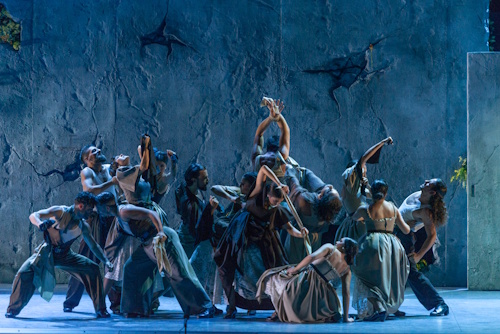
Photo Marcos Medina
Marin explains how the festival is also exploring how flamenco connects with younger generations and other musical genres. “At the Jazz Café, artists like La Plazuela will show how flamenco can be fused with urban rhythms and electronic textures. It’s flamenco in dialogue with the present.”
One of the things he is especially proud of this year is a focus on flamenco singing, particularly women vocalists, who he believes are still underrepresented on international stages. “We’ve put together a powerful series featuring six diverse acts, from traditional voices like Argentina and Lela Soto, to contemporary innovators such as young Catalan artist Queralt Lahoz, Ángeles Toledano, La Tremendita, and the politically charged energy of Las Migas. It’s a panoramic view of how women are shaping the sound and message of flamenco today.”

Photo The Rouge Photography
The London Flamenco Festival centres around the Sadler’s Wells venues. Being programmed at the main theatre gives flamenco the visibility and legitimacy it deserves, positioning flamenco not as folklore, but as a contemporary art form, he believes.
But 2025 also sees performances at Kings Place in Kings Cross and The Jazz Café in Camden. “Each venue brings a different kind of audience. Kings Place lets us explore the acoustic, musical soul of flamenco. The Jazz Café gives a platform to artists blending flamenco with contemporary sounds, and reaches new, younger listeners. We want flamenco to be experienced wherever it can resonate authentically.”

at Sadler’s Wells East as part of the London Flamenco Festival 2025
Photo Beatrix Mexi Molnar
Away from the stage, the Flamenco Festival features talks, workshops, and collaborative encounters. “We want people not just to watch flamenco, but to feel it, understand it, and become part of its living tradition.”
And there is definitely a growing audience for flamenco throughout the year, Marin feels. “For example, Manuel Liñan was at the Peacock Theatre last year with his show, Viva. Israel Galvan performed several times at Sadler’s Wells outside of the festival, and the International Guitar Foundation presents flamenco guitar in a regular basis. I think there is room for a wider presence not only of flamenco, but of Spanish music in general. With the right artists and the right framing, it can fill intimate clubs and grand theatres alike.”
That audience has its own character, he says, “But what is striking is how much overlap there is with other music and dance audiences, especially in London. Flamenco sits at a powerful crossroads of tradition, innovation, music, and movement.

Photo Marcos Gpunto
“What makes flamenco unique is its emotional intensity. It speaks directly to the heart. You don’t need to understand the language or the form to feel something profound. That immediacy allows us to reach a wide audience, including many first-timers who leave deeply moved.
“At the same time, flamenco has incredible depth and nuance that appeals to seasoned viewers, those curious about its rhythms, structures, and improvisation. So, we try to strike a balance: offering context and depth where it’s welcome, while keeping the experience accessible and compelling.”
Flamenco, for many people, brings a certain image but it has undergone a remarkable evolution over the past two decades insists Marin. “Twenty years ago, the focus was still very much on traditional forms: the purity of the cante (song), the structure of the baile (dance), and the depth of the toque (guitar). That foundation remains essential, but today we’re witnessing an extraordinary wave of innovation.

Photo Sofia Wittert
“A new generation of artists has emerged, unafraid to experiment and to push boundaries. They are blending flamenco with other genres like jazz, electronic music, and contemporary dance, not to dilute it, but to explore new creative languages through it. This fusion isn’t about fashion or trends; it’s about expanding the expressive potential of flamenco while staying rooted in its emotional truth.”
Most exciting, he adds, is how artists are now using flamenco as a vehicle for personal and political storytelling. “They still speak of universal themes like sorrow and joy, but they also explore identity, gender, migration, memory, subjects that reflect their lives and the world around them.”
As that has happened, so audiences today are much more open to the idea that flamenco isn’t just ruffles and stomping feet, he continues. “They see it as a language for storytelling, for protest, for experimentation. That shift in perception is key. And festivals like ours play a role in creating those new narratives. We’re not just presenting shows; we’re shaping how flamenco is seen and understood globally. We’re helping to redefine its identity, not by rejecting tradition, but by making space for all its expressions. That’s how flamenco stays alive.”

Photo Marcos Gpunto
In Spain, the home of flamenco, there is incredible artistic creativity, says Marin. “The new generation are full of ideas and courage. But structurally, the ecosystem is fragile. Venues are under pressure, funding is inconsistent, and there’s not enough long-term support for artistic development. We need stronger public and private commitment in Spain because, without it, even the most brilliant artists can’t sustain their work.”
Returning to the London Flamenco Festival, it’s continued future success lies in remaining curious and responsive, Marin believes. “Flamenco is a living, breathing art form, and for the festival to grow, we have to grow with it. listening closely to artists, to audiences, and to the wider cultural landscape. I believe our role goes beyond just presenting performances; we want to be a space for dialogue, education, and long-term artistic development. That means supporting new generations of flamenco artists, encouraging experimentation, and building bridges between flamenco and other disciplines such as theatre, contemporary dance, or digital art.
“My hope is that we keep surprising people, that we continue to challenge expectations and reveal flamenco’s incredible depth, versatility, and relevance. It’s not just a tradition; it’s a powerful, evolving voice that speaks to the human experience with extraordinary emotional and artistic richness. If we stay true to that spirit, the festival will keep thriving.”
The London Flamenco Festival runs from May 27 to June 8, 2025. Visit flamencofestival.org and sadlerswells.com for more details and ticketing.