
The Place, London
April 18, 2026
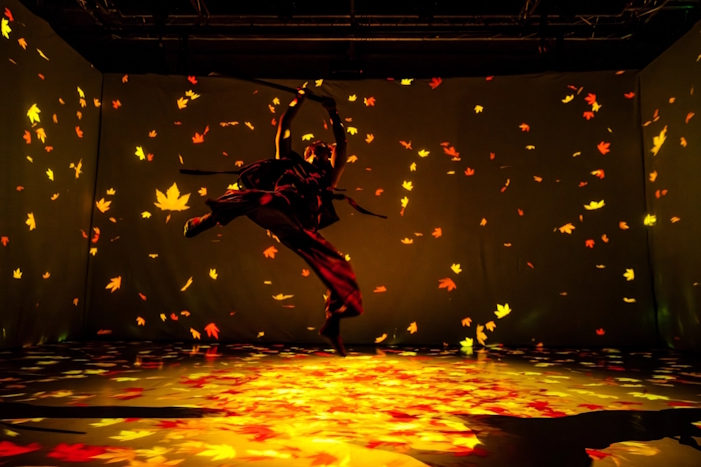
RONiN is an extraordinary and unusual dance work. Inspired by the masterless samurai of feudal Japan, it follows a fearless female swordfighter as she confronts powerful adversaries in a world shaped by honour, resilience and survival. Yukiko Masui’s production combines dance, swordplay and cutting-edge digital projection to create a theatrical experience that is both visually arresting and intellectually provocative.
At its best, the choreography is thrilling. Masui excels in crafting inventive and sharply controlled sequences in which physical precision and dramatic tension work together to powerful effect. The swordplay is especially striking, giving the piece much of its energy and focus. Cher Nicolette Ho, Jacob Lang and Nathan Bartman perform with total commitment, throwing themselves into the work with a concentration and discipline that sustains the production throughout.
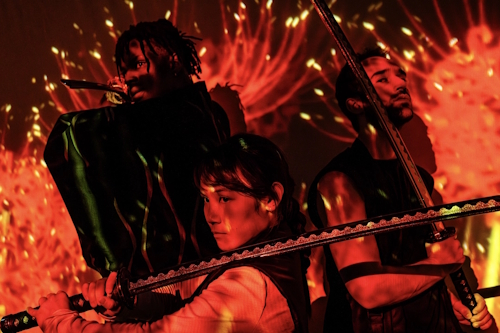
Photo Daniel Phung
A major element of the work is Barret Hodgson’s projections. Visually, they are often stunning. The piece opens in a digitally created rainforest accompanied by the sound of monsoon rain. For a time, the atmosphere is so immersive that it feels as though the audience has been transported into that environment. The journey through spring, summer, autumn and winter is rendered vividly through both image and sound, and the changing seasons give the work a clear emotional and visual context.
Yet this is also where RONiN becomes complicated. Although the projections are consistently impressive, there are many moments across the work’s sixty minutes when I found myself watching the digital imagery rather than the dancers. At times the live performance seemed to recede behind the projection design, raising a persistent question about where the audience’s attention was intended to rest. Was the focus to be on the dancers, or on the world being created around them? The balance between the two never felt entirely resolved.
Also remaining unresolved is the ending, which feels intentionally ambiguous, suggesting a dreamlike, symbolic or spiritual reworking of conflict in endless cycles replaying in different ways, rather than actual death and resurrection.
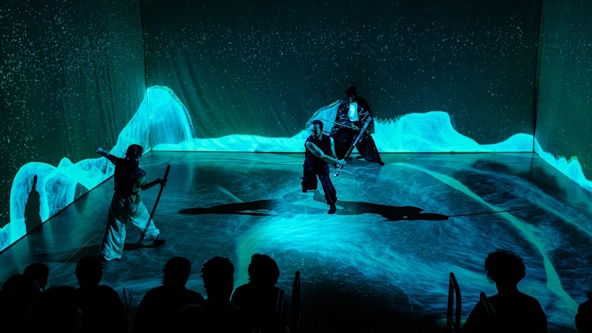
Photo Daniel Phung
Ruth Chan’s score adds another layer to the production, drawing on environmental sounds and voices, including the sound of children playing. It contributes to the shifting atmosphere of the four seasons and deepens the sense of movement through the different emotional states. Occasionally the music does feels a little overbearing, but there is enough variation in pace, texture and tone to stop it becoming oppressive.
Overall, RONiN is extraordinary, though not always easy to define. It leaves the audience with the unsettling but stimulating feeling of not being entirely sure what they have just witnessed. That uncertainty is part of what makes it so fascinating. It’s an interesting, unusual and challenging work, and one that lingers in the mind long after it ends. It’s highly recommended and I, for one, look forward to seeing more work from Masui.