
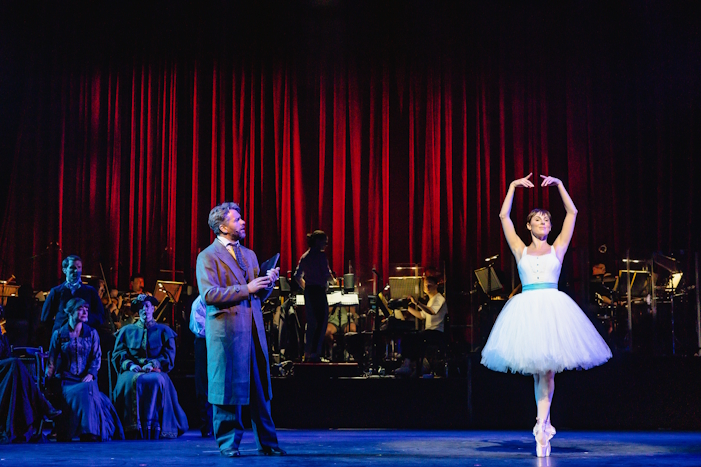
Little Dancer: A Musical in Concert, Theatre Royal, Drury Lane, London
July 27, 2025
There’s a difference you can feel, not just see, when you’re watching a highly trained, really top stage performer. It’s not about fame or fanfare. It’s about how they carry the stage, how they hold your attention even in the most chaotic moments. Little Dancer at Drury Lane was one of those moments.
Directed and choreographed by Susan Stroman, Little Dancer is a musical based on the story of Marie van Goethem, the girl who posed for impressionist Edgar Degas and became the heart of one of his most celebrated sculptures. After sell-out runs in Washington DC and Seattle, this London performance was a one-day-only event, borrowing the stage from the ongoing Hercules musical. That meant a same-day turnaround: reset lighting, reposition sound, rework stage cues, re-choreograph transitions. All within hours. And yet, the result was seamless. It was, in every way, a masterclass in professional stagecraft.
At the centre of it all was Tiler Peck.
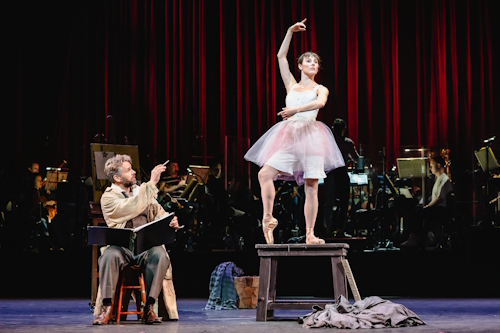
in Little Dancer at Theatre Royal Drury Lane
Photo Danny Kaan
She wasn’t just the lead; she was the anchor. Singing, acting, dancing, sometimes all at once, Peck navigated the performance with ferocious precision and effortless charm. She completed multiple quick changes. In the wings, one could see how she was assisted by fellow dancers who didn’t break character even as they smoothed her hair and tied her shoes. One particularly sharp moment: a dancer helped her backstage, ran back out for a solo, and then returned again to finish the quick change. It was choreography beyond the stage; a backstage ballet of its own.
And there was no interval. Ninety minutes straight. Yet Peck never faltered. Her breath control, her grounded centre, her stamina, everything screamed discipline. Even during the most intense emotional sequences, she wasn’t gasping or staggering. She danced with control, intention, and above all, presence.
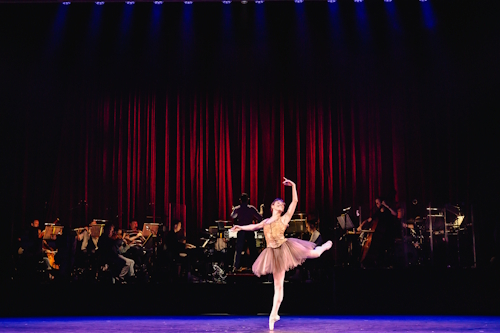
Photo Danny Kaan
The final dance is the heart of the show, a piece that carries her character from rage to grief to catharsis. There was no need for overblown expressions or melodrama. Her emotions were channelled through movement: the tightening of her shoulders, the sudden shifts in breath, the subtle resistance in her extensions. You didn’t just see her character’s breakdown, you felt it. Not because you were told to, but because her body told the story with clarity and grace.
Peck’s turns were clean, her transitions smooth, and her lines had rare quality: length without slackness, freedom with control. You could sense the weight in her movement, the breath underneath the music, the nuance in every phrasing. It was pure magic.
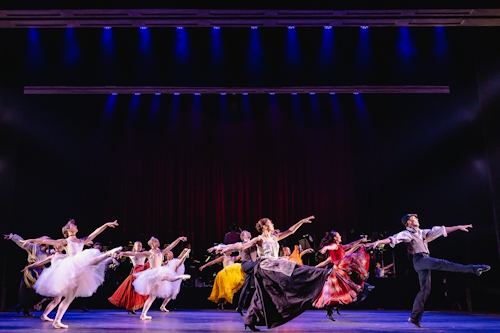
Photo Danny Kaan
So often, we’re dazzled by lights, projections, props; bells and whistles designed to fill space. But Little Dancer reminded me that it is the performer who gives the stage meaning, not the other way around. A master performer can hold an audience without a single spotlight shifting. They don’t need to overcompensate. They just do the work; and the work is enough.
Little Dancer is a show that trusts its audience. The stage design is simple: a hospital bed, a single chair, a moving desk, a few bookshelves. The storytelling came from performance, not gadgets. The body told the story, and the audience followed.
And at the heart of that trust stood Tiler Peck, a performer whose skill reminds us what cannot be replaced: craft, commitment, and that very specific alchemy that turns choreography into character.
But a super show all round too. Let’s hope it and Peck return, and next time for more than one outing.